The world of sports is constantly evolving, with padel gaining immense popularity globally. This rapid growth is driven by its accessibility, social nature, and engaging gameplay. Understanding the core components of a quality padel ground is crucial for players, facility owners, and investors alike. A well-constructed padel ground provides a safe, durable, and enjoyable playing surface, directly contributing to the sport’s overall appeal.
The increasing demand for padel courts is placing significant pressure on construction and maintenance practices. The quality of a padel ground isn’t just about aesthetics; it impacts player performance, reduces injury risks, and determines the longevity of the investment. From selecting appropriate materials to ensuring proper installation techniques, a deep understanding of padel ground construction is paramount.
Furthermore, sustainable and cost-effective padel ground solutions are becoming increasingly important. As the sport expands into new markets, there’s a growing need for innovative technologies and materials that minimize environmental impact and offer long-term value. This highlights the critical role of informed decision-making when it comes to building and maintaining a padel ground.
Introduction to Padel Ground Construction
Constructing a padel ground requires careful consideration of several factors, including the sub-base, artificial turf, glass walls, and lighting. Proper preparation of the sub-base is essential for ensuring the court’s stability and preventing uneven surfaces. A solid and level foundation is crucial for optimal player comfort and performance.
The choice of artificial turf significantly impacts the playability and durability of the padel ground. Factors like fiber height, density, and color influence ball bounce, player grip, and the overall aesthetic appeal. High-quality turf offers excellent resistance to wear and tear, extending the court's lifespan.
Defining a Padel Ground
A padel ground is a rectangular court enclosed by walls made of glass and metallic mesh. Measuring 20 meters long and 10 meters wide, it’s smaller than a traditional tennis court. The court is divided into two halves by a net, and players use a solid paddle to hit a rubber ball against the walls.
Unlike tennis, padel allows players to utilize the walls as part of the game, adding a strategic dimension to the gameplay. This unique feature makes padel accessible to players of all skill levels, fostering a social and inclusive sporting environment.
The defining characteristic of a padel ground lies in its integrated wall system. These walls, typically made of tempered glass and metal mesh, enable players to rebound the ball, creating dynamic rallies and exciting gameplay. This design significantly differentiates padel from other racquet sports.
Core Components of a Quality Padel Ground
A high-quality padel ground comprises several key components. The sub-base, typically constructed from compacted gravel or concrete, provides a stable foundation. Above this lies the playing surface, which commonly consists of artificial turf designed for optimal ball bounce and player comfort.
The glass walls surrounding the court are a crucial element, ensuring player safety and enabling the unique wall-play aspect of the game. These walls must be made of tempered glass for durability and impact resistance. The metal mesh typically tops the glass, preventing balls from escaping the court.
Finally, adequate lighting is essential for evening play. LED lights are often preferred for their energy efficiency and bright, even illumination. A well-designed lighting system enhances visibility and creates a pleasant playing experience.
Durability and Longevity of Padel Grounds
The durability of a padel ground is directly linked to the quality of materials used and the installation process. Investing in high-quality artificial turf, tempered glass, and a properly constructed sub-base significantly extends the court’s lifespan.
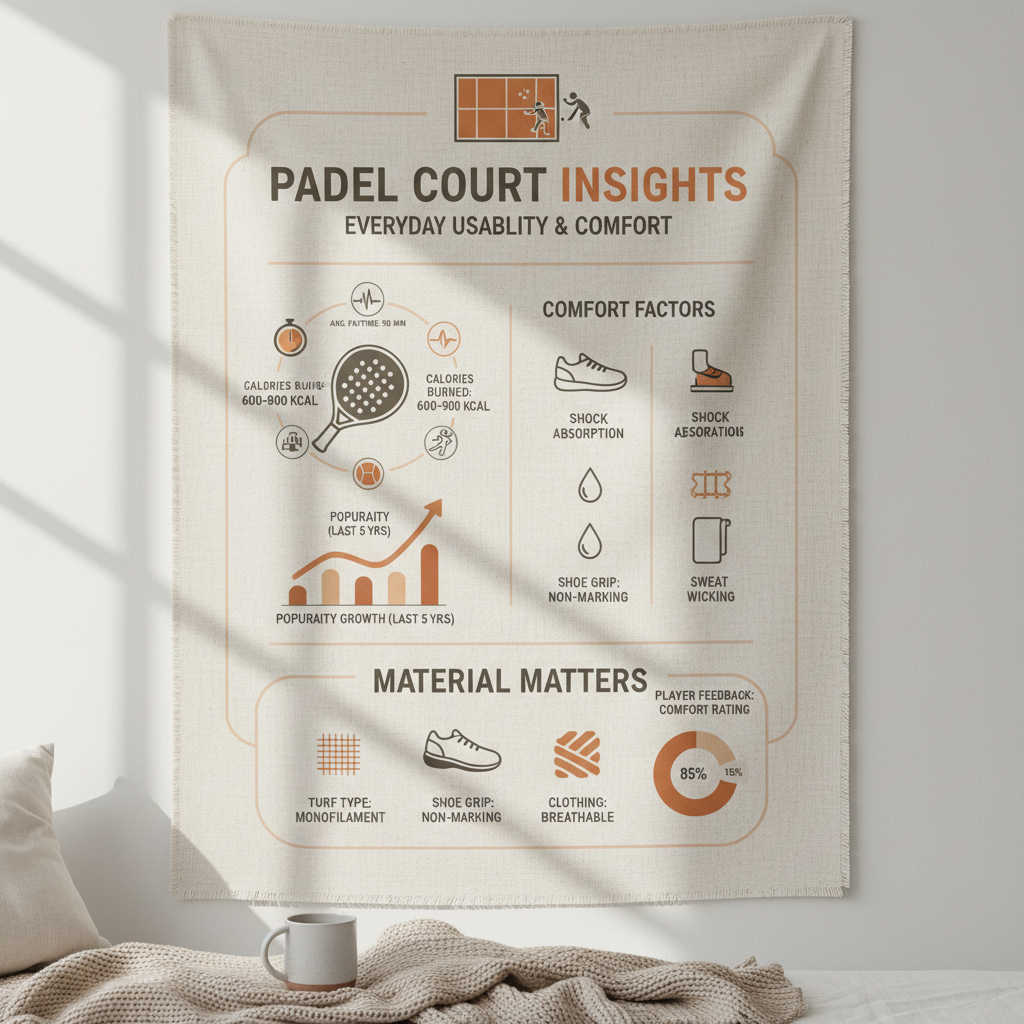
Factors like UV exposure, weather conditions, and player traffic contribute to wear and tear. Regular maintenance, including cleaning and occasional turf repair, is crucial for preserving the court’s integrity.
Durability Ratings of Different Padel Ground Components
Global Applications of Padel Grounds
Padel is experiencing explosive growth worldwide, with padel grounds popping up in Europe, South America, North America, and Asia. Spain remains the epicenter of the sport, boasting the highest number of courts, but its popularity is rapidly spreading to other countries.
Padel grounds are increasingly found in commercial facilities like sports clubs and leisure centers, offering a new revenue stream and attracting a diverse clientele. Residential communities are also incorporating padel courts as an amenity, enhancing property value and fostering a sense of community.
Advantages of Modern Padel Ground Designs
Modern padel ground designs prioritize player safety, performance, and aesthetic appeal. The use of panoramic glass walls provides unobstructed views and enhances the overall playing experience. Advanced turf technologies offer improved ball bounce and grip, catering to players of all skill levels.
Innovative lighting systems with minimal glare and energy-efficient LEDs contribute to a more comfortable and sustainable playing environment. Modular padel court designs are gaining traction, offering flexibility and ease of installation.
Furthermore, the incorporation of smart technologies, such as court booking systems and automated lighting control, streamlines operations and enhances the user experience. These advancements contribute to the growing appeal of padel as a modern and dynamic sport.
Future Trends in Padel Ground Technology
The future of padel ground technology will likely focus on sustainability, accessibility, and enhanced performance. The development of eco-friendly turf materials, made from recycled or renewable resources, will minimize the environmental impact of padel courts.
Smart padel grounds equipped with sensors and data analytics will offer insights into player performance and court usage patterns. This data can be used to optimize training programs and improve facility management.
We can also anticipate the integration of augmented reality (AR) and virtual reality (VR) technologies to create immersive and interactive padel experiences. These innovations will continue to drive the evolution of the sport and expand its global reach.
Key Performance Indicators for Padel Ground Construction and Maintenance
| Construction Quality |
Maintenance Frequency |
Player Satisfaction |
Cost-Effectiveness |
| Sub-Base Compaction (PSI) |
Turf Cleaning Schedule (Times/Week) |
Overall Playability Score (1-10) |
Initial Investment Cost ($) |
| Turf Installation Quality (Visual Inspection) |
Glass Wall Inspection (Times/Year) |
Bounce Consistency Rating (1-10) |
Annual Maintenance Budget (%) |
| Glass Panel Integrity (Impact Resistance Test) |
Lighting System Efficiency (Lumens/Watt) |
Injury Rate (Incidents/1000 Players) |
Lifespan Expectancy (Years) |
| Drainage System Effectiveness (Water Retention Test) |
Mesh Durability (Tensile Strength) |
Court Availability (Hours/Week) |
Return on Investment (ROI) |
| Overall Structural Stability (Load Test) |
Surface Friction Coefficient (Slip Resistance) |
Player Feedback Score (1-5 Stars) |
Replacement Part Costs |
| Compliance with Safety Standards (ISO Certification) |
Accessibility for All Players |
Community Engagement (Event Frequency) |
Environmental Impact (Carbon Footprint) |
FAQS
Padel grounds are smaller than tennis courts, measuring 20m x 10m compared to tennis's 23.77m x 8.23m. Padel utilizes enclosed glass and mesh walls as part of gameplay, allowing players to rebound the ball. A solid paddle is used in padel, instead of the strung rackets in tennis. This makes padel more accessible and focuses more on strategy and precision rather than power.
A typical padel ground installation can take between 4 to 8 weeks, depending on site preparation, ground conditions, and weather. Sub-base preparation and leveling are often the most time-consuming aspects. Installation also includes assembling the structure, laying the turf, and installing the lighting. A modular padel ground can be installed faster, often within 2-4 weeks.
Regular maintenance includes sweeping or brushing the turf to remove debris, periodic cleaning with specialized cleaning products, and checking the tension of the mesh. Annual inspections of the glass walls and structural components are crucial. Resanding the turf may be necessary every 1-2 years to maintain optimal ball bounce. Regularly checking and maintaining the lighting system is also vital.
The average cost of building a padel ground can range from $25,000 to $60,000, depending on materials, location, and installation complexity. Modular padel courts are generally less expensive than traditional construction. Additional costs may include site preparation, lighting, fencing, and landscaping. Ongoing maintenance costs should also be factored into the budget.
Padel grounds can be adapted for various weather conditions, but proper drainage is essential to prevent waterlogging. The turf should be designed for outdoor use and have good drainage capabilities. In colder climates, considerations should be made for snow removal. The glass walls offer some wind protection, but extreme weather may necessitate temporary closures.
Choosing sustainable materials, such as recycled turf or eco-friendly sub-base materials, reduces the environmental impact of padel ground construction. Lowering the carbon footprint through using local materials and energy-efficient lighting solutions helps. Sustainable padel grounds also minimize waste and promote responsible resource management, contributing to a more environmentally friendly sporting facility.
Conclusion
In conclusion, a well-constructed and maintained padel ground offers a compelling combination of sporting excitement, social interaction, and investment potential. Understanding the core components, embracing modern designs, and prioritizing sustainability are key to creating a thriving padel facility. The accessibility and dynamic nature of the game make it increasingly popular worldwide.
Looking ahead, advancements in materials, technology, and construction techniques will further enhance the quality and longevity of padel grounds. We encourage facility owners, players, and investors to explore the opportunities that padel presents and contribute to the continued growth of this exciting sport. For more information and to explore our padel ground solutions, visit our website today.

 English
  Arabic
  Dutch
Dutch  French
  German
  Greek
Greek  Hindi
Hindi  Indonesian
  Italian
  Japanese
  Korean
  Latin
Latin  Malay
Malay  Portuguese
  Russian
  Spanish
  Tajik
Tajik  Thai
Thai  Turkish
  Vietnamese