To be honest, things have been moving fast lately. Everyone's talking about prefabricated structures, right? Modular construction, off-site manufacturing… it's all the buzz. But what people don't realize is, it's not just about slapping some panels together. There’s a lot more to it than that, especially when you're actually on site, wrestling with the stuff. Have you noticed how everyone wants everything thinner, lighter, stronger? Makes my head spin.
It’s a good intention, mind you. Just... complicated. We're seeing a huge push for panoramic padel court solutions, and that’s fine, demand’s there. But designing these things? It’s a minefield. You think you’ve got a clever detail figured out, and then you get a crew trying to install it in the rain… and suddenly you’re wishing you’d just kept it simple.
The biggest issue, I think, is forgetting the human element. Engineers love their simulations, their stress tests… but nothing beats a real-world beating.
The Shifting Landscape of Panoramic Padel Court
Panoramic padel court is exploding, no doubt about it. We're seeing it in everything from high-end sports clubs to community centers. It's not just a trend; it's a fundamental shift in how people are thinking about recreational spaces. Demand is through the roof, and everyone wants to get a piece of the action. I encountered a shortage of tempered glass at a factory in Guangzhou last time, delayed a project by two weeks. Crazy times.
But it's not just about slapping up some glass and steel. It’s about creating an experience. The key is finding the sweet spot between cost, durability, and aesthetics. And that’s harder than it sounds.
Design Pitfalls: Avoiding the Common Traps
Strangely enough, the biggest problem is over-engineering. Everyone tries to make things too complex. They add features nobody asked for, complicate the installation process... and then wonder why the project is over budget and behind schedule. I always tell the designers: keep it simple, stupid. Seriously. It’s the best advice I can give. Focus on the core functionality, and don't get distracted by shiny objects.
Another thing? Ignoring the long-term maintenance. You can build the most beautiful panoramic padel court in the world, but if it's a nightmare to maintain, it's going to fall into disrepair quickly. Think about cleaning, repairs, and replacements. Plan for it from the start.
And the foundations! Don't skimp on the foundations. Seriously. I've seen too many courts shift and crack because someone tried to save a few bucks on the base.
Materials Matter: A Hands-On Perspective
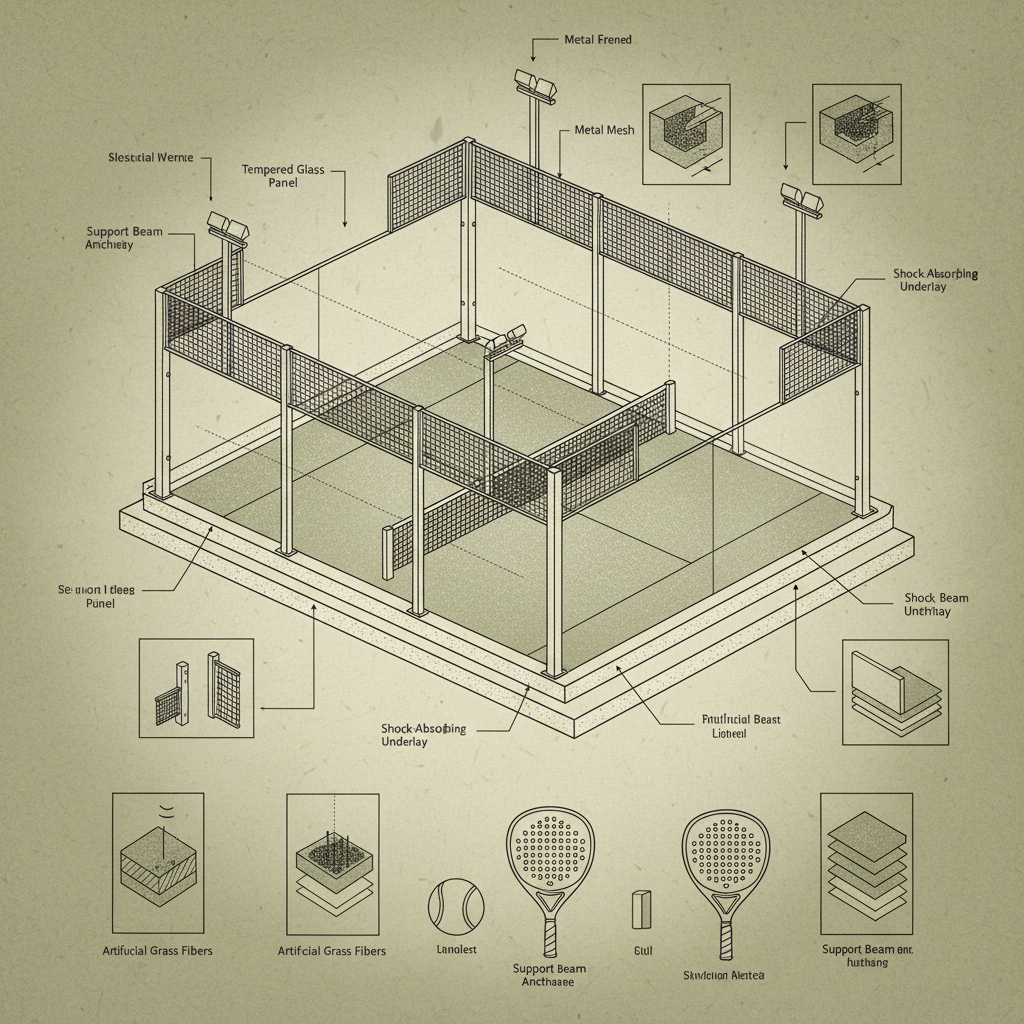
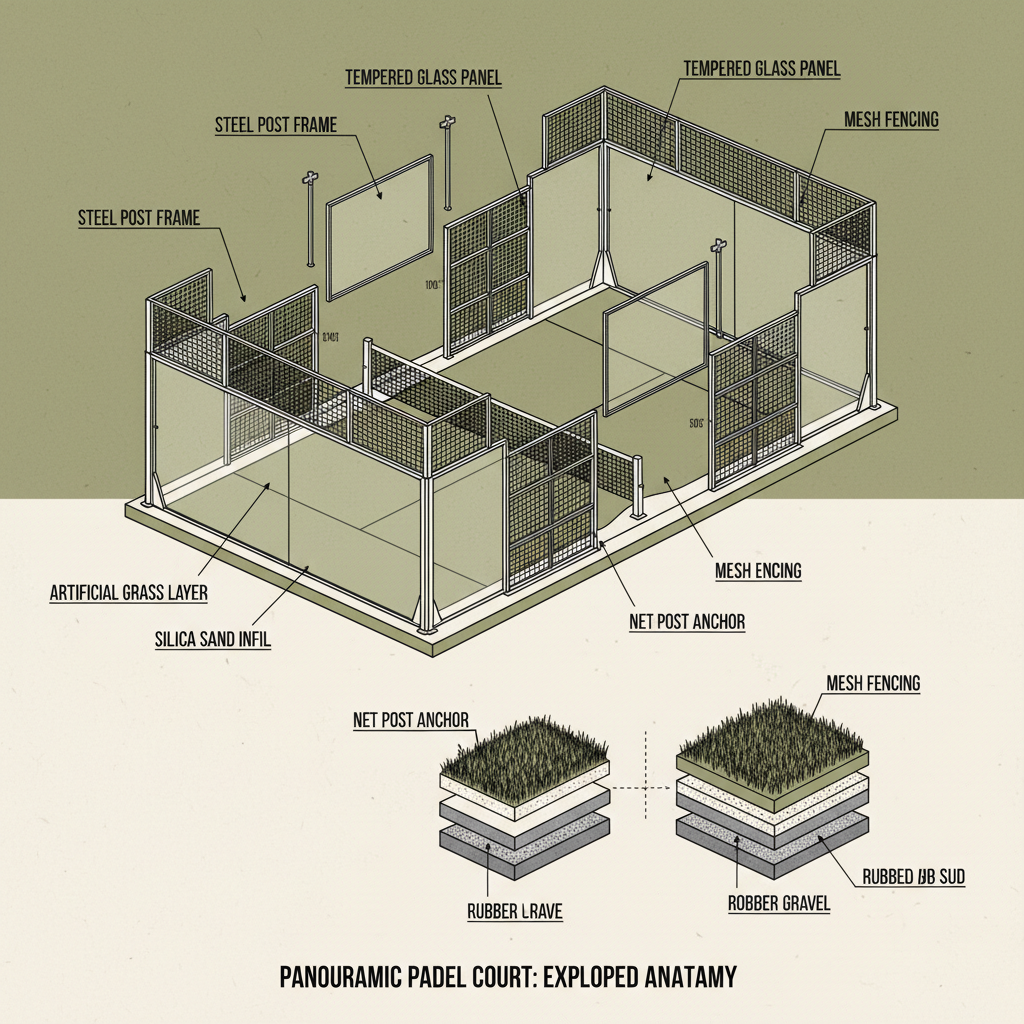
The glass, obviously, is crucial. You want tempered glass, of course, but the quality of the tempering makes a huge difference. You can tell a good piece of glass just by the way it feels – it’s solid, without any distortions. The smell is subtle, almost metallic, if it's been tempered correctly. Handling it on-site, you want gloves, obviously. You don't want fingerprints all over it.
Then there’s the steel frame. Galvanized steel is pretty standard, but the coating thickness is key. A thinner coating will rust faster, obviously. I've seen frames fail after only a few years because they went cheap on the galvanizing. It’s a false economy. We also experiment with aluminum sometimes, especially for indoor courts, because it’s lighter and corrosion-resistant. But it's more expensive, so you need to weigh the pros and cons.
And don't forget the flooring! The surface needs to be durable, non-slip, and comfortable to play on. Artificial turf is common, but you need to choose a high-quality turf that can withstand heavy use. Cheap turf will wear out quickly and become a safety hazard.
Real-World Testing: Beyond the Lab
Look, lab tests are fine, but they don't tell the whole story. You need to put these things through the wringer in real-world conditions. We set up a test court at a local park and let the public beat on it for six months. We tracked everything: usage, wear and tear, weather exposure… everything.
We also subjected the materials to extreme temperatures and humidity. We left steel samples out in the rain for weeks. We blasted the glass with gravel. We even had a guy try to break it with a baseball bat (don’t tell anyone). It was… educational.
Panoramic Padel Court Component Durability Testing
How Users Actually Use Panoramic Padel Court
This is where things get interesting. You think people are going to use it for serious competitive play, right? But in reality, a lot of it is casual recreation. Families playing together, friends having a bit of fun… It's more about the social aspect than the athleticism. We've also seen some people using it for fitness classes, which is cool.
Anyway, I think understanding how people use these things is crucial for designing them properly. You need to account for wear and tear, ease of access, and overall comfort.
Advantages & Disadvantages: A Pragmatic View
The advantages are obvious: panoramic padel court is fun, it's a great workout, and it's relatively easy to learn. It’s also visually appealing, which is a big plus. But there are disadvantages too. The initial cost can be high, and maintenance can be a pain. It also takes up a lot of space. And, frankly, the noise can be an issue for nearby residents.
And don't get me started on the glare. The glass can reflect sunlight in a way that's blinding to players and annoying to neighbors. We're trying to mitigate that with anti-glare coatings, but it's still a challenge.
Customization & Adaptability: Beyond the Standard
One thing we're seeing a lot of demand for is customization. People want courts that are tailored to their specific needs and preferences. Last month, that small boss in Shenzhen who makes smart home devices insisted on changing the interface to , and the result was… a complete disaster. He wanted it to match his phone, said it was "more modern." It looked ridiculous, and it added weeks to the installation. I swear...
But seriously, we can customize everything from the size and shape of the court to the color of the frame and the type of flooring. We can also add features like lighting, sound systems, and even heated floors (for those colder climates).
The key is finding the right balance between customization and standardization. You want to offer enough flexibility to meet the needs of your customers, but you also want to keep costs down and maintain quality control.
Panoramic Padel Court Customization Options
| Feature |
Customization Level |
Estimated Cost Impact |
Implementation Complexity |
| Court Dimensions |
High |
Moderate |
Medium |
| Glass Color/Tint |
Medium |
Low |
Low |
| Flooring Material |
High |
High |
Medium |
| Lighting System |
Medium |
Moderate |
High |
| Sound System Integration |
Low |
Low |
Low |
| Integrated Scoring/Timer |
Medium |
Moderate |
High |
FAQS
With proper maintenance – regular cleaning, inspection for corrosion, and timely replacement of worn parts – a well-built panoramic padel court can easily last 15-20 years. The glass is the most durable component, but the steel frame is susceptible to rust if not properly protected. We've seen some courts last even longer, but it really depends on the climate and how well they're cared for.
Annual maintenance typically involves a thorough inspection of the frame for corrosion, re-coating any areas of rust, cleaning the glass, and repairing or replacing any worn flooring. You might also need to tighten bolts and check the integrity of the joints. It's not a huge amount of work, but it's important to stay on top of it. Budget around 5-10% of the initial cost for annual maintenance.
Uneven ground is a challenge, but it's not necessarily a dealbreaker. You'll need to level the ground properly before installing the court. This might involve excavation, filling, and compaction. A solid foundation is essential for ensuring the stability and longevity of the structure. Skipping this step will lead to problems down the road, trust me.
Permitting requirements vary significantly depending on your location. You'll likely need to obtain a building permit, and you may also need to comply with zoning regulations, safety codes, and environmental regulations. It’s always best to check with your local authorities before starting any construction. Don't try to cut corners here – it could lead to fines or even having to tear down the court.
They’re designed to be weather resistant, but no structure is completely immune to the elements. High winds, heavy snow, and extreme temperatures can all cause damage over time. That's why it's important to choose high-quality materials and ensure proper installation. Regular maintenance can also help to protect the structure from the elements.
There are a lot of options, from simple floodlights to more sophisticated LED systems. LED is the way to go, really – they're more energy-efficient and provide better illumination. You can also integrate smart lighting controls that allow you to adjust the brightness and color temperature. The key is to provide even, glare-free lighting that doesn't interfere with play.
Conclusion
So, where does all this leave us? Panoramic padel court is a growing market, and there’s a lot of opportunity for innovation. But it’s also a complex undertaking. It requires careful planning, attention to detail, and a healthy dose of common sense. Forget the hype, focus on the fundamentals, and don't be afraid to get your hands dirty.
Ultimately, whether this thing works or not, the worker will know the moment he tightens the screw. If it feels solid, if it feels right, then you're on the right track. And if it doesn’t… well, you go back to the drawing board. Visit our website at www.yocoolcn.com to learn more.


 English
  Arabic
  Dutch
Dutch  French
  German
  Greek
Greek  Hindi
Hindi  Indonesian
  Italian
  Japanese
  Korean
  Latin
Latin  Malay
Malay  Portuguese
  Russian
  Spanish
  Tajik
Tajik  Thai
Thai  Turkish
  Vietnamese