Squash court manufacturing is a specialized industry crucial for providing facilities for this globally popular sport. From recreational centers to professional tournaments, the demand for high-quality, standardized squash courts continues to grow. This detailed exploration delves into the intricacies of squash court manufacturing, covering essential aspects from design and materials to global applications and future innovations. Understanding the nuances of this field is paramount for athletes, facility managers, and anyone involved in the sport’s development. The industry’s evolution is driven by a need for durability, safety, and consistent playing surfaces, making it a significant sector within sports infrastructure.
The global squash market is experiencing steady growth, fueled by increasing participation rates and the sport’s inclusion in major multi-sport events. This translates to a corresponding demand for new and renovated squash facilities. According to the World Squash Federation, there are over 50,000 squash courts in more than 180 countries. Meeting this demand requires specialized squash court manufacturers capable of producing courts that adhere to strict international standards, such as those set by the World Squash Federation (WSF). Challenges remain in ensuring equitable access to quality facilities, particularly in developing nations.
Investing in proper squash court construction and maintenance isn't merely about facilitating a game; it’s about fostering athletic development, promoting healthy lifestyles, and building communities. A well-constructed court, built by a reputable squash court manufacturer, can serve as a hub for competitive play, training, and social interaction for decades. The economic impact extends beyond direct sports participation, boosting local tourism and supporting related industries.
Introduction to Squash Court Manufacturing
Squash court manufacturing isn’t simply about assembling panels; it's a sophisticated process requiring precise engineering, material science, and adherence to stringent regulations. A reputable squash court manufacturer understands the unique demands of the sport—the impact, the speed, the angles—and translates those into a playing surface that optimizes performance and minimizes injury risk. The process involves careful selection of materials, precise fabrication, and meticulous installation.
The modern squash court is a far cry from the rudimentary courts of the past. Advancements in materials like tempered glass, engineered wood, and specialized polyurethane coatings have dramatically improved playability, durability, and safety. Furthermore, modular construction techniques have revolutionized installation, allowing for faster build times and greater flexibility in adapting to various space constraints.
Defining Squash Court Manufacturing
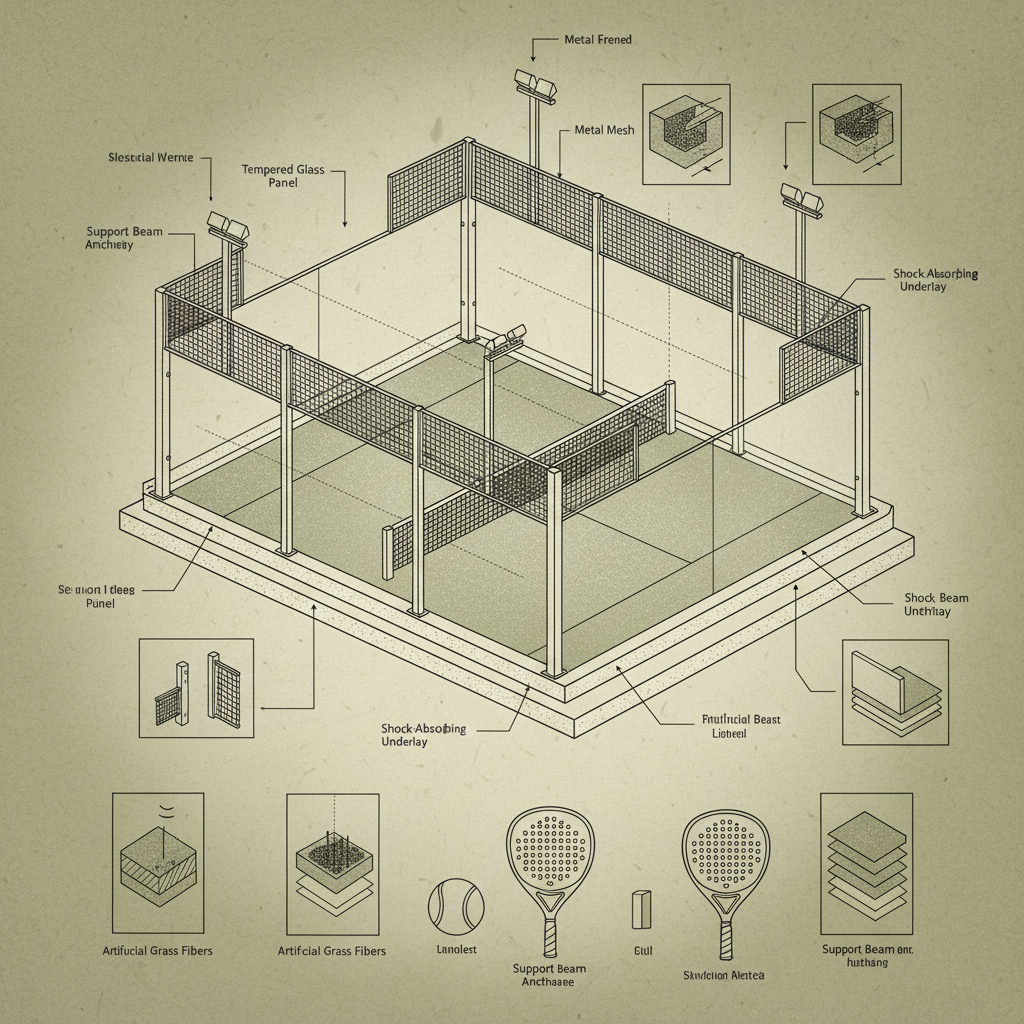
Squash court manufacturing encompasses the complete process of designing, fabricating, and installing a playing court suitable for the sport of squash. This includes the construction of the four walls, the floor, the front wall’s tin and service line, the glass back wall (often tempered glass), and the overall court dimensions as defined by the World Squash Federation (WSF). A qualified squash court manufacturer will ensure compliance with all relevant safety standards and provide guidance on court orientation and ventilation.
The core of manufacturing lies in precision. Even minor deviations in dimensions or surface smoothness can significantly impact gameplay. The materials used must be capable of withstanding the constant impact of the squash ball traveling at high speeds, while also providing a consistent rebound. The entire system – walls, floor, glass – must work in harmony.
It extends beyond merely creating the physical structure; a comprehensive manufacturing service includes court resurfacing, repair, and maintenance, ensuring the longevity and optimal performance of the facility. Offering a complete lifecycle solution is a hallmark of a leading squash court manufacturer.
Key Factors in Squash Court Manufacturing
Durability is paramount. A squash court experiences tremendous stress from high-impact ball strikes and player movement. A quality squash court manufacturer will utilize materials like tempered glass, robust laminated wood, and resilient floor coverings designed to withstand this constant wear and tear. Proper construction techniques and quality control are also essential to prevent cracks, delamination, and other structural failures.
Playability is directly linked to the accuracy of dimensions and the consistency of the playing surface. Strict adherence to WSF specifications is critical. The rebound characteristics of the walls and the floor influence the speed and trajectory of the ball, affecting the strategic nuances of the game. A skilled squash court manufacturer focuses on creating a predictable and responsive playing environment.
Safety is non-negotiable. Tempered glass back walls must meet stringent safety standards to prevent shattering upon impact. Flooring materials should provide sufficient cushioning to reduce the risk of injuries. Proper ventilation and lighting are also crucial for player safety and comfort. A responsible squash court manufacturer prioritizes these safety features in all aspects of design and construction.
Global Applications & Use Cases
Squash courts are found in a wide variety of settings globally, ranging from private clubs and public recreation centers to schools, universities, and professional sports facilities. Demand is particularly high in countries with a strong squash tradition, such as the United Kingdom, Australia, Egypt, and Pakistan. The versatility of modular construction allows for squash courts to be installed in diverse locations, even within existing buildings.
In post-disaster relief operations, durable and rapidly deployable squash courts can provide a valuable recreational outlet for affected communities, fostering a sense of normalcy and promoting physical and mental well-being. The sport's relatively small footprint makes it ideal for temporary or mobile facilities. Squash court manufacturers are increasingly exploring solutions for adaptable court systems.
Furthermore, squash facilities are increasingly incorporated into wellness centers and corporate fitness programs, reflecting a growing awareness of the health benefits of the sport. The demand for high-quality courts in these settings is driving innovation in design and materials.
Squash Court Manufacturing Methods Comparison
Advantages & Long-Term Value
Investing in a professionally manufactured squash court offers significant long-term value. The initial cost is offset by reduced maintenance requirements, increased lifespan, and improved player safety. A court built by a reputable squash court manufacturer provides a reliable and consistent playing surface for years to come.
Sustainability is also a key advantage. Modern manufacturing techniques prioritize the use of eco-friendly materials and energy-efficient processes. The durability of high-quality courts reduces the need for frequent replacements, minimizing waste and environmental impact.
Future Trends & Innovations
The future of squash court manufacturing is likely to be shaped by advancements in materials science, digital fabrication, and sustainable construction practices. Research into new composite materials promises to deliver even greater durability, enhanced playability, and reduced weight.
The integration of digital technologies, such as 3D printing and computer-aided design (CAD), will enable greater customization and precision in manufacturing. Furthermore, the development of "smart" courts – equipped with sensors to monitor play and provide performance data – could revolutionize training and coaching methods.
Challenges & Solutions in Manufacturing
One of the main challenges in squash court manufacturing is maintaining consistent quality across large-scale production runs. Variations in materials or manufacturing processes can lead to inconsistencies in the playing surface. Implementing rigorous quality control procedures and utilizing automated fabrication techniques can help mitigate this risk.
Another challenge is the cost of materials, particularly tempered glass and specialized floor coverings. Exploring alternative materials and optimizing manufacturing processes can help reduce costs without compromising quality. A forward-thinking squash court manufacturer actively researches cost-effective and sustainable options.
Finally, ensuring proper installation is crucial for the long-term performance of the court. Providing comprehensive installation training and support to contractors is essential for guaranteeing a successful outcome.
Summarizing Challenges and Solutions in Squash Court Manufacturing
| Challenge |
Impact on Court Quality |
Potential Solution |
Implementation Cost (1-10) |
| Material Consistency |
Uneven rebound, inconsistent gameplay |
Rigorous material testing & sourcing |
6 |
| High Material Costs |
Increased court price, reduced accessibility |
Explore alternative materials, optimized design |
7 |
| Installation Errors |
Structural issues, safety hazards |
Comprehensive installer training, quality checks |
5 |
| Maintaining WSF Standards |
Court disqualification from tournaments |
Strict adherence to specifications, regular audits |
8 |
| Supply Chain Disruptions |
Project delays, increased costs |
Diversify suppliers, maintain buffer stock |
4 |
| Lack of Skilled Labor |
Poor workmanship, safety risks |
Invest in training programs, partner with vocational schools |
7 |
FAQS
High-quality squash courts typically utilize tempered glass for the back wall to ensure safety and resilience. The side and front walls are constructed from durable materials like plywood with a specialized coating, or fiber-reinforced panels. Flooring systems often incorporate a layered construction with rubber or polyurethane for cushioning and consistent rebound. A reputable squash court manufacturer will carefully select materials based on performance, durability, and safety standards.
Installation time varies depending on the type of court (modular vs. traditional build), site conditions, and the complexity of the project. A modular squash court, utilizing pre-fabricated panels, can often be installed in as little as 1-2 weeks. A traditionally built court can take several weeks to months. A professional squash court manufacturer will provide a detailed timeline as part of the project proposal.
Consider their experience, reputation, adherence to WSF standards, quality of materials, installation services, and after-sales support. Look for a manufacturer with a proven track record of successful installations and positive client testimonials. A reliable squash court manufacturer will provide detailed specifications, warranties, and ongoing maintenance options.
WSF (World Squash Federation) certification is extremely important, especially for courts intended for competitive play. It ensures that the court meets the required dimensions, surface characteristics, and safety standards. A WSF-certified court is eligible to host sanctioned tournaments and provides a fair and consistent playing experience. Choosing a squash court manufacturer that prioritizes WSF compliance is critical.
Regular maintenance includes cleaning the walls and floor, checking for loose panels or screws, and addressing any damage promptly. The floor may require occasional resurfacing to maintain optimal rebound characteristics. Annual inspections by a qualified technician are recommended to identify and address potential issues before they become major problems. Squash court manufacturers often offer maintenance contracts.
The cost of a squash court installation varies significantly based on factors like the type of court (modular vs. traditional), materials used, site preparation requirements, and geographic location. A basic modular court can cost between $20,000 and $40,000, while a custom-built court can easily exceed $60,000. Obtaining quotes from multiple squash court manufacturers is essential for accurate budgeting.
Conclusion
In conclusion, the world of squash court manufacturing is a complex yet vital field. A high-quality squash court, crafted by a dedicated squash court manufacturer, represents a significant investment in athletic infrastructure, community well-being, and the future of the sport. The factors discussed – durability, playability, safety, and innovation – are all interconnected and contribute to a superior playing experience.
Looking ahead, continued advancements in materials, construction techniques, and digital technologies will undoubtedly shape the next generation of squash courts. By embracing sustainable practices and prioritizing quality, manufacturers can ensure that squash courts remain a vibrant and accessible resource for players of all levels for decades to come. Visit our website at www.yocoolcn.com to learn more.




 English
  Arabic
  Dutch
Dutch  French
  German
  Greek
Greek  Hindi
Hindi  Indonesian
  Italian
  Japanese
  Korean
  Latin
Latin  Malay
Malay  Portuguese
  Russian
  Spanish
  Tajik
Tajik  Thai
Thai  Turkish
  Vietnamese