The global rise of racquet sports has brought the padel square into the spotlight as a premier solution for urban sports development. Integrating elements of tennis and squash, the design of a professional padel court requires a precise balance of structural integrity and player safety to meet international competition standards. Understanding the technical specifications of these facilities is crucial for developers and sports club owners who aim to maximize space utility while providing an elite athletic experience.
From a manufacturing perspective, the padel square represents a sophisticated intersection of tempered glass engineering and galvanized steel fabrication. As the demand for these courts surges across Europe, the Middle East, and the Americas, the industry is shifting toward modular designs that allow for faster installation and greater durability against diverse climatic conditions. This evolution ensures that high-quality sporting infrastructure can be deployed rapidly in both indoor and outdoor settings.
Investing in a well-constructed padel facility is not merely about providing a place to play; it is about creating a community hub that promotes health and social interaction. By focusing on the core components of the padel square—from the shock-absorbent turf to the high-impact glass walls—operators can ensure a long-term return on investment through reduced maintenance costs and increased player satisfaction.
Global Relevance of Padel Square Infrastructure
The proliferation of the padel square globally is a testament to the shifting trends in urban wellness and recreational architecture. According to recent industry growth data, the number of courts worldwide has seen an exponential increase, driven by the sport's accessibility and social nature. This surge puts immense pressure on manufacturers to provide standardized, high-quality courts that can withstand heavy daily usage while adhering to the strict safety guidelines set by international federations.
However, the rapid expansion has revealed a critical challenge: the variance in construction quality. Many early installations suffered from glass shattering or turf degradation due to poor material selection. Addressing these issues requires a rigorous approach to engineering, ensuring that every padel square is built with weather-resistant coatings and tempered safety glass that can handle high-velocity impacts without compromising the safety of the athletes.
Technical Definition and Industrial Meaning
In simple technical terms, a padel square is a specialized enclosed sports facility measuring 10 by 20 meters, featuring a combination of glass walls and metallic mesh fencing. Unlike traditional tennis courts, the walls are an integral part of the game, allowing the ball to bounce off them, which fundamentally alters the dynamics of the sport and necessitates a highly precise architectural layout.
From an industrial standpoint, these courts represent a shift toward "modular sports architecture." The integration of prefabricated steel frames and standardized glass panels means that a padel square can be manufactured in a factory setting and assembled on-site with minimal disruption. This efficiency is critical for commercial developers who need to minimize the window between ground-breaking and revenue generation.
Furthermore, the connection to modern humanitarian and urban needs is evident in the way these courts are used to revitalize abandoned industrial zones. By transforming underutilized concrete slabs into vibrant padel square complexes, cities can promote public health and foster social cohesion through a sport that is inclusive of all age groups and skill levels.
Core Components for Maximum Durability
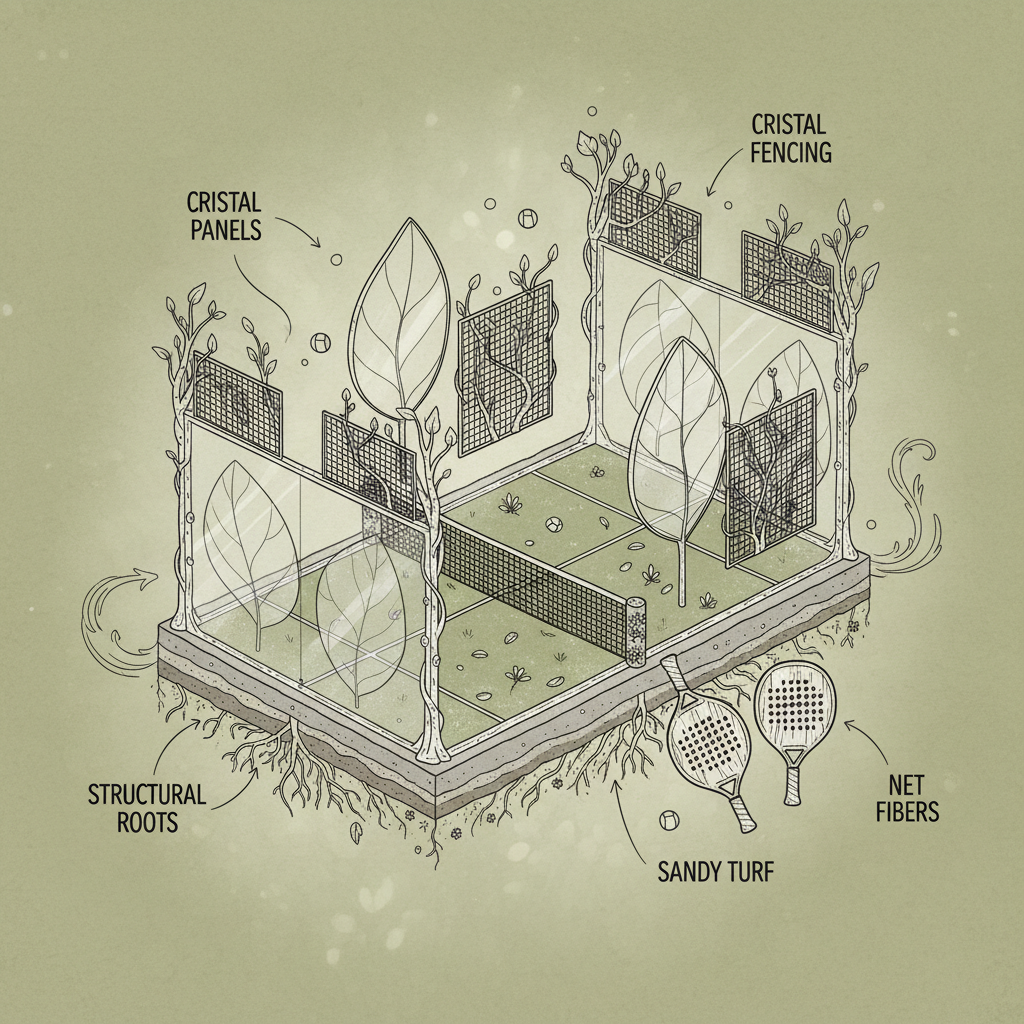
The longevity of a padel square depends heavily on the quality of its structural steel. We utilize hot-dip galvanized steel to prevent corrosion, especially in coastal regions where salt air can rapidly degrade untreated metal. This ensures the frame remains rigid and safe for decades.
Another critical element is the tempered safety glass. A professional padel square typically employs 10mm or 12mm thick glass that has undergone rigorous heat treatment. This not only provides the necessary rebound characteristics for the ball but also ensures that in the rare event of a break, the glass shatters into small, blunt pieces rather than dangerous shards.
Finally, the surface layer—usually synthetic turf infused with silica sand—plays a vital role in player joint protection. A high-density padel square surface reduces the impact on ankles and knees, allowing players to perform quick lateral movements and sudden stops without increasing the risk of injury.
Performance Metrics of Court Materials
Evaluating the quality of a padel square requires a data-driven approach to material science. Different configurations of glass and turf can significantly impact the "playability" and the long-term maintenance costs. For instance, the bounce consistency of the glass wall is a primary metric for professional-grade certifications.
By analyzing various material combinations, we can determine which specifications provide the best balance between cost-efficiency and high-end performance. The following chart illustrates the comparative ratings of different padel square construction methods based on durability, bounce quality, and installation speed.
Material Performance Ratings for Padel Square
Global Applications and Regional Use Cases
The application of the padel square varies significantly by region. In Southern Europe, where the sport originated, courts are often integrated into luxury resorts and municipal sports centers. In these contexts, the focus is on aesthetic integration and high-frequency durability, as the courts often operate 12-15 hours a day.
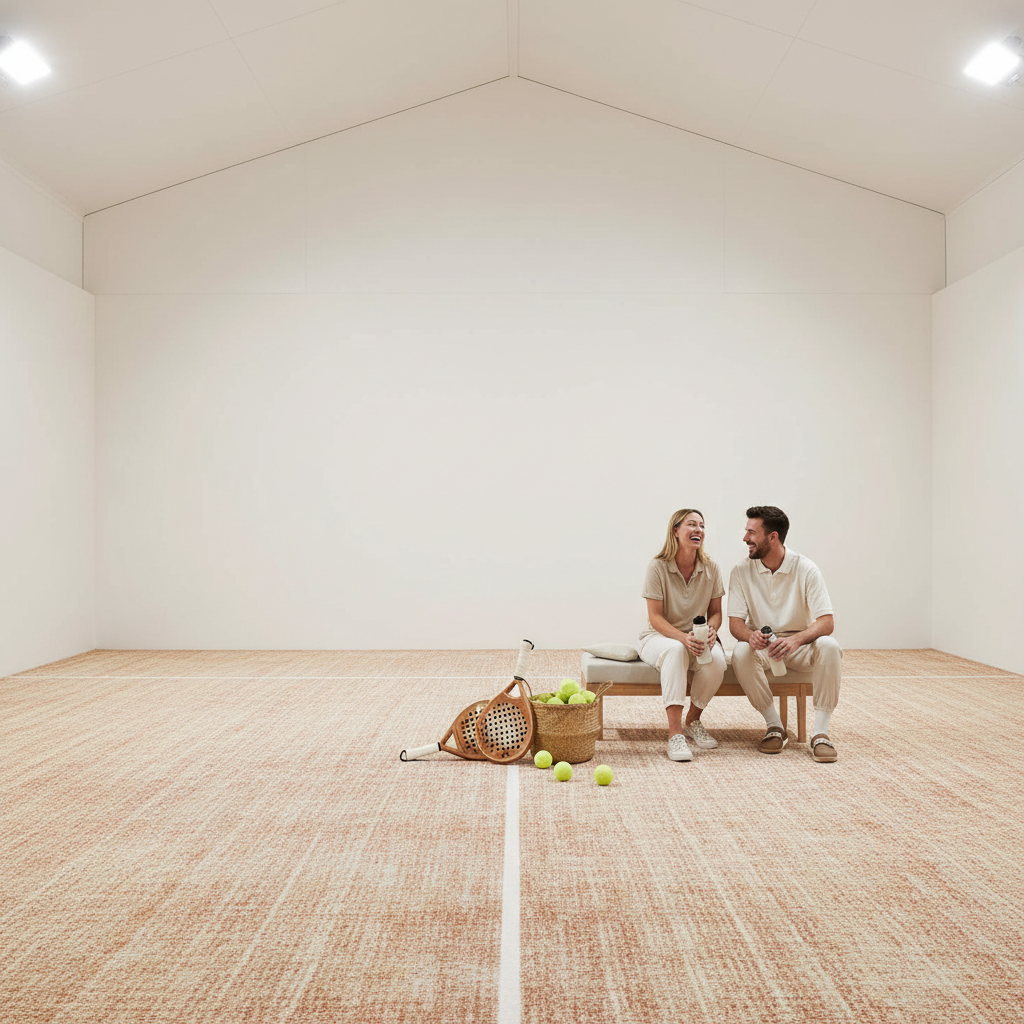
Conversely, in emerging markets like the Middle East, we see a trend toward indoor, climate-controlled padel square installations. These projects require advanced ventilation systems and specialized lighting to ensure that players remain comfortable despite the external heat, showcasing the flexibility of the modular court design.
Long-Term Value and Sustainability Benefits
From a financial perspective, the padel square offers a superior return on investment compared to traditional tennis courts. Due to the smaller footprint, a developer can fit three padel courts in the space of one tennis court, effectively tripling the potential hourly revenue and increasing the number of simultaneous players.
Sustainability is also becoming a core value in the manufacturing process. Modern padel square components are increasingly made from recyclable steel and eco-friendly synthetic turfs. By reducing the carbon footprint of the production process and implementing long-life materials, manufacturers are helping club owners achieve "green" certifications.
Beyond the economics, there is an emotional value associated with these facilities. A high-quality padel square provides a sense of prestige and professional legitimacy to a sports club. When players feel safe and experience a consistent bounce, they develop a deeper trust in the facility, leading to higher membership retention rates.
Future Trends in Smart Court Technology
The future of the padel square lies in the integration of digital transformation. We are seeing the emergence of "Smart Courts" equipped with embedded sensors and high-definition cameras. These systems can automatically track player movement, record match statistics, and provide real-time coaching feedback via mobile apps, transforming the court into an interactive data hub.
Additionally, innovations in materials are leading to the development of "silent glass" and energy-absorbing turf, which minimize the acoustic impact of the game on surrounding residential areas. This is particularly important as padel square installations move deeper into densely populated urban centers where noise ordinances are strict.
Automation is also touching the installation process. Robotic precision drilling and AI-optimized structural analysis are ensuring that every padel square is perfectly leveled, eliminating the common issue of "dead spots" on the court surface.
Comparative Analysis of Padel Square Specifications
| Court Grade |
Glass Thickness |
Frame Treatment |
Expected Lifespan |
| Community |
10mm Tempered |
Powder Coated |
5-8 Years |
| Club Standard |
12mm Tempered |
Hot-dip Galvanized |
10-15 Years |
| Professional |
12mm Panoramic |
Electro-Galvanized |
15-20 Years |
| World Padel Tour |
12mm Ultra-Clear |
Reinforced Alloy |
20+ Years |
| Indoor Elite |
10mm Safety |
Anti-Oxidant Coat |
12-18 Years |
| Outdoor Extreme |
12mm Weather-Resist |
Heavy Galvanized |
15-20 Years |
FAQS
Typically, the installation of a professional padel square takes between 7 to 14 days, depending on the site preparation. The process includes pouring the concrete base, assembling the steel frame, installing the glass panels, and finally laying the synthetic turf and spreading the silica sand. Using modular prefabricated components can significantly reduce this timeline.
Panoramic padel square designs eliminate the vertical pillars at the back of the court, providing an unobstructed view for spectators and cameras. While standard courts are more cost-effective, panoramic courts are preferred for tournaments and high-end clubs due to their superior aesthetics and better visibility for broadcasting.
Depending on the volume of play, the turf in a padel square usually lasts between 5 to 8 years. However, the silica sand needs to be topped up and brushed every 6-12 months to maintain a level surface and ensure the turf fibers remain upright for consistent ball bounce.
Yes, a reinforced concrete slab is highly recommended for any padel square. This ensures the court remains perfectly level and prevents the heavy glass panels from shifting over time. A properly engineered foundation is the most critical factor in preventing structural failure and ensuring player safety.
Absolutely. By using hot-dip galvanized steel and high-grade tempered glass, a padel square can withstand temperature extremes. In very hot climates, we recommend specialized UV-resistant turf to prevent fading, while in cold climates, expansion joints are used to accommodate the natural contraction of the metal frame.
To ensure compliance, the padel square must adhere to the dimensions and material specifications set by the International Padel Federation (FIP). This includes specific requirements for the height of the glass, the tension of the metallic mesh, and the quality of the lighting systems to avoid glare for the players.
Conclusion
The implementation of a high-quality padel square is a strategic investment that merges advanced manufacturing engineering with the growing global demand for social wellness. By focusing on key technical pillars—such as galvanized structural frames, tempered safety glass, and high-density synthetic turf—operators can create a facility that is not only durable and safe but also highly profitable. The transition toward modularity and "smart" integration ensures that these sports facilities can evolve alongside the athletes who use them.
Looking forward, the industry will continue to prioritize sustainability and digital integration, making the padel square a cornerstone of modern urban planning. For developers and club owners, the key to success lies in partnering with manufacturers who understand the nuance of E-E-A-T principles in sports infrastructure—Experience, Expertise, Authoritativeness, and Trustworthiness. Visit our website for more professional solutions: www.yocoolcn.com



 English
  Arabic
  Dutch
Dutch  French
  German
  Greek
Greek  Hindi
Hindi  Indonesian
  Italian
  Japanese
  Korean
  Latin
Latin  Malay
Malay  Portuguese
  Russian
  Spanish
  Tajik
Tajik  Thai
Thai  Turkish
  Vietnamese