
In the rapidly evolving landscape of racquet sports, the paddle racquet stands as a testament to precision engineering and material science. Far beyond a simple sporting accessory, these specialized racquets are crucial components in the performance dynamics of padel, a sport that combines elements of tennis, squash, and badminton. Designed for optimal power, control, and durability within the confines of a paddle tennis court, their construction involves sophisticated composite materials and advanced manufacturing techniques.
This comprehensive overview delves into the intricate world of paddle racquet technology, exploring the meticulous process flow from raw material to finished product, analyzing key technical specifications, and highlighting their critical role in various application scenarios. We will also examine industry trends, conduct a comparative analysis of leading vendors, and discuss the immense potential of customized solutions in meeting diverse player demands and professional requirements.
Understanding the engineering principles behind a high-performance paddle racquet is essential for both manufacturers aiming for innovation and players seeking to optimize their game on any padel court.
The padel industry is experiencing exponential growth globally, driving innovation in paddle racquet design and manufacturing. Key trends include:
These trends underscore a commitment to delivering high-performance, durable, and player-centric paddle racquet options that cater to the evolving demands of the sport.
The creation of a high-quality paddle racquet is a multi-stage, precision-driven process, blending advanced material science with sophisticated manufacturing techniques. Here's a detailed breakdown:
The EVA foam core is either die-cut or CNC machined from larger sheets to precise racquet head shapes. This ensures consistent thickness and weight distribution, critical for racquet balance and performance. Precision tolerance is paramount.
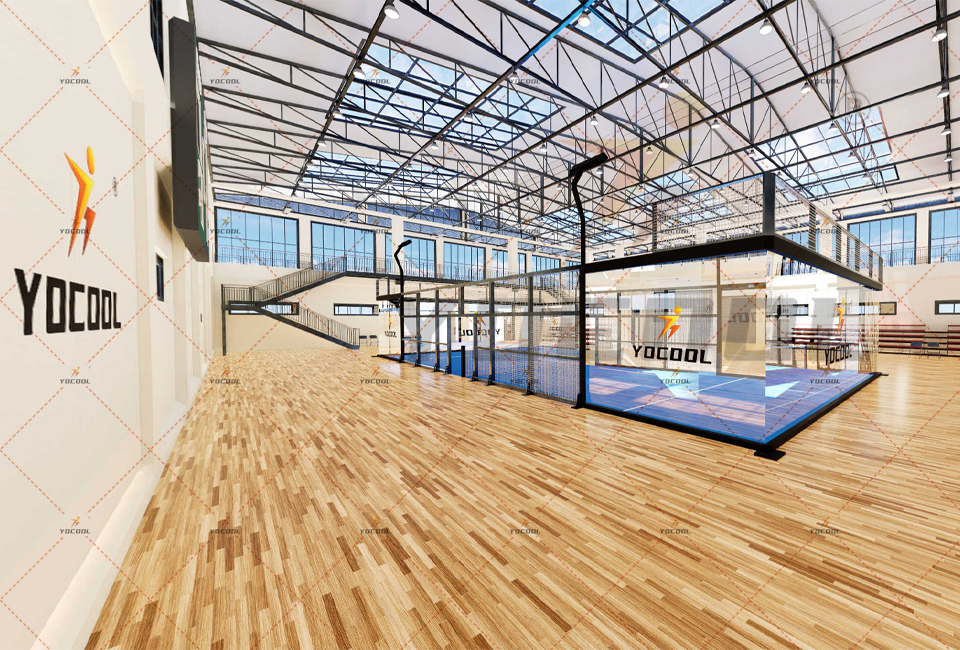
Figure 1: Illustration of a precision-engineered paddle racquet component.
Pre-impregnated (pre-preg) carbon fiber sheets are meticulously laid up around the EVA core in a specific orientation. This "forging" process involves:
The assembled racquet is placed into a precision mold and subjected to heat and pressure. This curing process, often in an autoclave (for aerospace-grade composites) or hot press, solidifies the resin, bonding all layers into a monolithic structure. Parameters like temperature, pressure, and cure time are strictly controlled according to material specifications.
Each paddle racquet undergoes rigorous testing to meet industry standards (e.g., ISO 9001 for quality management, internal performance benchmarks).
The handle is wrapped with a base grip and often an overgrip. A safety wrist strap is attached, completing the product.
Service Life: A well-maintained, high-quality paddle racquet can have a service life of 2-5 years for competitive players, depending on frequency of use and impact. For recreational players, it can extend significantly longer. Manufacturers typically recommend replacement when structural integrity is compromised or performance noticeably degrades.
Target Industries/Users: The primary target is professional padel players, amateur enthusiasts, and padel clubs that utilize padel court facilities. Applications span from competitive tournaments on professional padel court installations to casual play at recreational centers.
Understanding the technical parameters is crucial for selecting the optimal paddle racquet for specific play styles and performance requirements. The following table provides typical specifications for an advanced model, such as the NO.4 360 Panoramic Padel Black.
| Parameter | Specification | Technical Impact |
|---|---|---|
| Shape | Round / Teardrop Hybrid | Optimized for control with a forgiving sweet spot; good for defensive and all-around players. |
| Weight | 360-375 grams | Balanced for maneuverability and power; suitable for intermediate to advanced players. |
| Balance | Mid (260-275mm) | Offers a good blend of control for volleys and power for smashes. |
| Core Composition | Multi-density Black EVA Foam | Provides excellent ball output, enhanced feel, and superior vibration absorption. |
| Surface Material | 12K Carbon Fiber with 3D Textured Finish | High stiffness and durability; 12K weave offers a blend of power and control. Textured finish enhances spin. |
| Frame Material | Full Carbon Fiber Bi-tubular | Reinforced frame for structural rigidity, stability, and increased power transfer. |
| Thickness | 38mm | Standard thickness, providing a good blend of power and control. |
| Sweet Spot | Broad, Centralized | Forgiving on off-center hits, reducing errors and enhancing consistency. |
| Grip | Ergonomic, Cushioned | Comfortable handling, shock absorption, and reduced fatigue during extended play. |
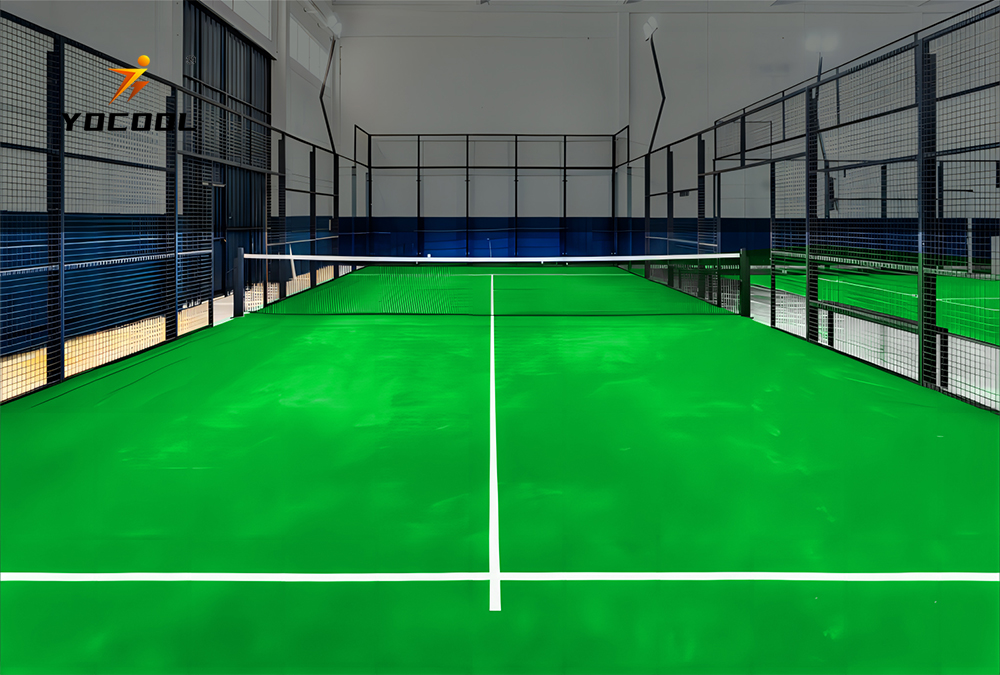
Figure 2: Close-up of the textured surface of a modern paddle racquet.
The design and technical advantages of a modern paddle racquet make it exceptionally well-suited for the unique demands of padel, both in professional and recreational settings.
When sourcing paddle racquet equipment, B2B decision-makers must consider several factors beyond initial cost. A comprehensive vendor comparison focuses on quality, innovation, production capabilities, and after-sales support.
| Feature | Vendor A (e.g., Yocoolcn) | Vendor B (Established Brand) | Vendor C (Emerging Brand) |
|---|---|---|---|
| Manufacturing Expertise | Advanced Composite Molding, CNC Precision | Proprietary Technologies, High R&D Investment | Competitive Cost, Standardized Processes |
| Material Quality | Premium 12K/18K Carbon Fiber, Multi-density EVA | Graphene, High-Modulus Carbon, Patented Polymers | Standard Carbon/Fiberglass, Basic EVA |
| Customization Options | Extensive (weight, balance, core, surface texture, branding) | Limited (pro-player focus), High MOQ for branding | Basic (color, logo placement) |
| Certifications & Standards | ISO 9001, Internal Performance Benchmarks | FIP Approved, ATP Endorsed, ISO 9001 | Basic CE, Self-certified |
| Lead Time for Bulk Orders | 4-6 Weeks (Negotiable) | 8-12 Weeks (High Demand) | 3-5 Weeks (Smaller Scale) |
| After-Sales Support | Dedicated Account Manager, Warranty, Technical Support | Global Service Network, Extensive Warranty | Basic Email/Chat Support |
This comparison highlights that specialized manufacturers like Yocoolcn offer a compelling balance of advanced manufacturing, high-quality materials, and crucial customization capabilities, making them an ideal partner for businesses requiring tailored paddle racquet solutions.
For B2B clients, the ability to procure customized paddle racquet solutions is a significant advantage. This can range from bulk orders with specific branding to highly specialized racquets designed for unique performance requirements.
These customization options ensure that clients receive a product that not only meets high-performance standards but also aligns perfectly with their operational or branding strategies.
A rapidly expanding national padel club chain required a standardized, durable, and branded paddle racquet for their rental fleet and pro shops across 15 new padel tennis court facilities. Our solution involved supplying 500 units of a custom-designed hybrid shape racquet with a medium-density EVA core, chosen for its versatility for players of all levels. The racquets featured the club's corporate colors and logo, applied during the finishing process. This ensured consistent brand identity, high player satisfaction with the equipment, and reduced replacement costs due to the superior durability of the carbon fiber construction. The club reported a 30% increase in merchandise sales within the first quarter.
A top-ranked professional padel player sought to launch a signature paddle racquet series. The requirement was for a diamond-shaped racquet, featuring a high-density EVA core for maximum power, a 12K carbon fiber surface with a coarse texture for aggressive spin, and a head-heavy balance. Through iterative design and prototyping with our engineering team, we developed a racquet that precisely matched the player's exacting specifications for competitive play. Each racquet in the series bore the player's signature and unique graphic design. The launch was highly successful, selling out initial batches within days and significantly boosting the player's brand and overall equipment sales.
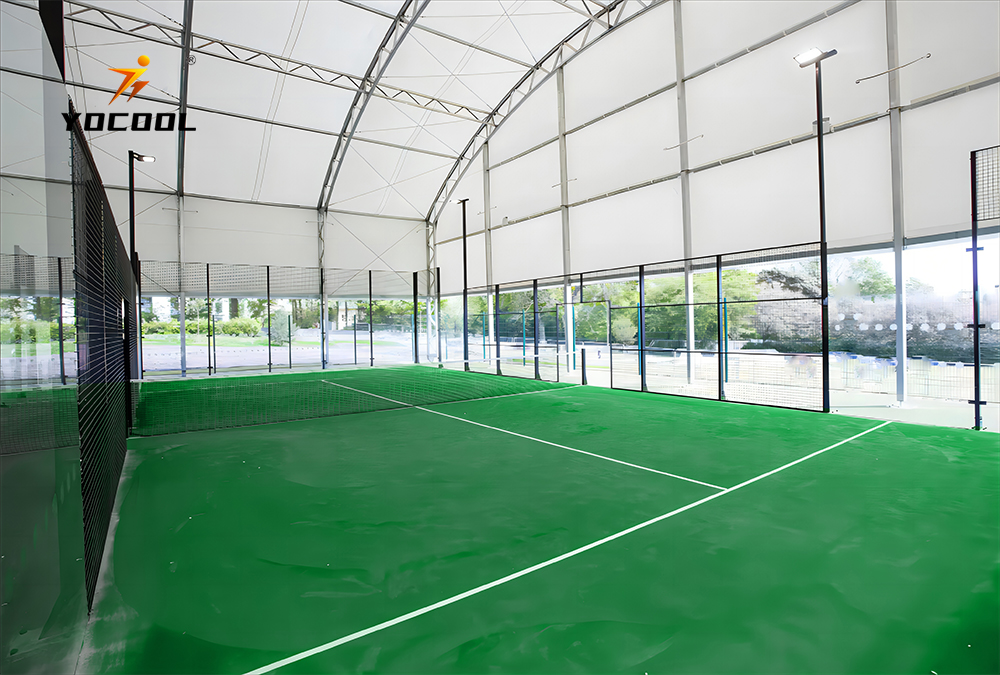
Figure 3: A professional paddle racquet ready for play on a panoramic padel court.
A: Professional paddle racquet weights typically range from 360 to 380 grams. Lighter racquets (360-370g) offer more maneuverability and control, while heavier racquets (370-380g) provide greater power and stability.
A: The EVA foam core density significantly impacts feel and response. Softer cores offer more ball output, comfort, and vibration dampening, ideal for control. Harder cores provide more power and precision, suitable for aggressive players. Multi-density cores offer a balanced approach.
A: For bulk orders with customization, the lead time typically ranges from 4 to 6 weeks, depending on the complexity of the customization and order volume. Specific timelines can be confirmed upon detailed inquiry.
Our standard lead time for non-customized paddle racquet orders is approximately 2-3 weeks, with express options available upon request. For customized or large-volume orders, lead times typically range from 4-6 weeks, allowing for meticulous production and quality control. We maintain robust supply chain management to ensure timely delivery and efficient fulfillment globally.
All our paddle racquet products come with a standard 6-month manufacturer's warranty against defects in materials and workmanship from the date of purchase. This warranty covers structural integrity failures under normal use. Misuse, accidental damage, or unauthorized modifications are not covered. Detailed warranty terms and conditions are available upon request.
We are committed to providing exceptional B2B customer support. Our dedicated account managers offer personalized service from initial consultation through order fulfillment and after-sales care. We provide technical assistance, product guidance, and efficient resolution of any queries or concerns. Clients can reach us via email at sales@yocoolcn.com or by phone during business hours for expert support.
The modern paddle racquet is a sophisticated piece of sports engineering, critical to the performance and enjoyment of padel. Its manufacturing demands precision, advanced materials, and rigorous quality control to meet the demanding requirements of players and the unique dynamics of the padel court. As the sport continues to grow, innovation in paddle racquet technology will remain at the forefront, pushing the boundaries of material science and design to deliver ever-improving performance and player experience.
Top Professional Padel Court for Sale Factories Buyer Guide
Guide to Choosing the Best padel court for sale manufacturers
Find Reliable Padel Court for Sale Suppliers for Quality Courts
Yocool Platform Paddle Tennis Factory Quality Equipment Solutions
Find a Reliable Platform Paddle Tennis Supplier for Quality Equipment
Discover Top Platform Paddle Tennis Factories for Superior Equipment
 English
  Arabic
  Dutch
Dutch  French
  German
  Greek
Greek  Hindi
Hindi  Indonesian
  Italian
  Japanese
  Korean
  Latin
Latin  Malay
Malay  Portuguese
  Russian
  Spanish
  Tajik
Tajik  Thai
Thai  Turkish
  Vietnamese