
The global surge in padel's popularity has catalyzed significant advancements in sports infrastructure, particularly in the design and construction of padel court facilities. These specialized courts are not merely playing surfaces; they represent a convergence of precision engineering, durable materials, and player-centric design. This comprehensive overview delves into the critical aspects of modern padel court development, from material science and manufacturing processes to application benefits and long-term operational considerations, catering specifically to B2B decision-makers and engineering professionals.
The demand for high-quality, resilient, and aesthetically pleasing padel facilities drives continuous innovation. Understanding the intricate details of a padel court's construction is paramount for ensuring player safety, optimizing game performance, and maximizing return on investment for facility operators. Our focus extends beyond superficial aesthetics to the core structural integrity, material selection, and adherence to international sporting standards.
The global padel market is experiencing exponential growth, driven by its accessible gameplay, social appeal, and increasing professionalization. This growth is mirrored by significant trends in padel court construction:
This expansion underscores the importance of scalable manufacturing and deployment strategies, ensuring that the supply of high-quality courts can meet the escalating demand. The competitive landscape for padel tennis court manufacturers is thus dynamic, favoring innovators who can combine quality, efficiency, and cost-effectiveness. The padel tennis court price remains a critical factor, driving the need for optimized material sourcing and streamlined production processes without compromising structural integrity or player experience.
The construction of a high-performance padel court involves a meticulous, multi-stage manufacturing and assembly process. This ensures structural integrity, optimal playability, and long-term durability.
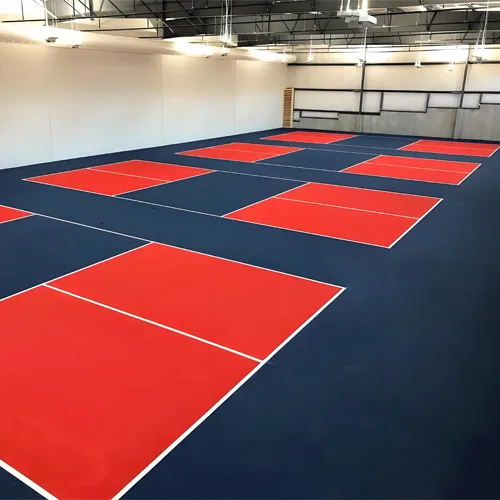
The performance and longevity of a padel court are directly attributable to its adherence to stringent technical specifications. Below is a summary of typical parameters.
| Component | Specification Detail | Standard/Certification |
|---|---|---|
| Dimensions | 20m (length) x 10m (width) (internal measurements) | FIP Regulations |
| Structural Steel | S235JR / S275JR, Hot-dip galvanized (min. 80 microns), Powder coated (min. 80-120 microns) | EN 10025, EN ISO 1461, ISO 12944 |
| Glass Walls | 10mm or 12mm Tempered Safety Glass | EN 12150-1, CE Certified |
| Artificial Turf | Polyethylene (PE) monofilament or fibrillated fibers, 10-15mm pile height, Silica sand infill (8-12 kg/m²) | FIP Approved, DIN 18035-7 |
| Lighting | LED Floodlights (8 units), 300-500 Lux average, UGR < 25 | EN 12193 (Sports Lighting), IP65 |
Adherence to these specifications guarantees not only player safety but also optimizes the ball bounce, speed, and overall dynamic of the game, ensuring a premium experience on every padel court.
The versatility and robust construction of modern padel court systems enable their deployment across a broad spectrum of environments and target industries.
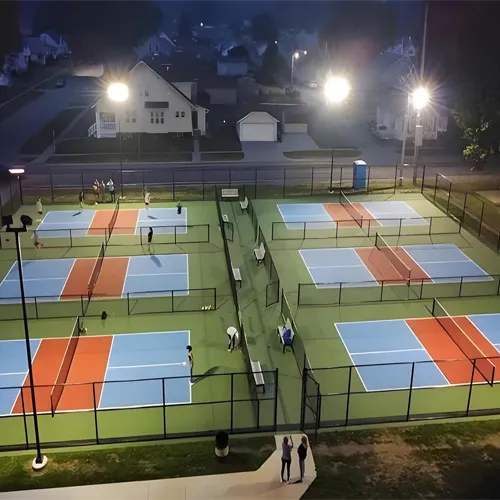
Selecting the right vendor for a padel court installation is critical. Key differentiators often lie in material quality, certification, customization capabilities, and after-sales support.
| Feature | Premium Manufacturer (e.g., Yocoolcn) | Standard Vendor | Budget Option |
|---|---|---|---|
| Steel Treatment | Hot-dip Galvanized + Powder Coated (Dual Layer) | Electrolytic Galvanized + Powder Coated (Single Layer) | Primer + Paint (Limited Protection) |
| Glass Thickness | 12mm Tempered Safety Glass (EN 12150) | 10mm Tempered Safety Glass (EN 12150) | 8mm Tempered Glass (Lower Impact Rating) |
| Artificial Turf | FIP Certified Monofilament (12-15mm) | Standard Fibrillated (10-12mm) | Basic Fibrillated (8-10mm) |
| Lighting | High-efficiency LED (8x 200W, 500 Lux avg) | Standard LED (8x 150W, 300 Lux avg) | Halogen/Basic LED (6x 100W, <300 Lux avg) |
| Warranty (Structure) | 10-15 Years | 5-7 Years | 1-3 Years |
| Certifications | ISO 9001, CE, FIP Homologation | CE, Manufacturer's Quality Control | Minimal/Self-certified |
This comparison highlights that initial investment in a premium supplier translates to superior longevity, reduced maintenance, enhanced player experience, and greater compliance with international standards, offering a more robust long-term asset. The choice also impacts the overall perceived value and reputation of the facility housing the padel court.
Recognizing that every project has unique requirements, leading manufacturers offer extensive customization options for padel court installations. This flexibility ensures that the final product aligns perfectly with architectural aesthetics, operational demands, and budget constraints.
Our engineering team collaborates closely with clients from conceptualization to execution, leveraging advanced 3D modeling and structural analysis to ensure that customized solutions maintain the highest standards of safety, durability, and playability.
Our commitment to quality and engineering excellence is evidenced by successful installations across diverse global markets. These case studies demonstrate the real-world impact and reliability of our padel court solutions.
Challenge: Develop a multi-court padel facility in a high-temperature, saline environment with demanding aesthetic requirements.
Solution: Installed four panoramic padel court systems featuring enhanced hot-dip galvanization and marine-grade powder coating for superior corrosion resistance. High-density monofilament turf was chosen for optimal play in hot climates.
Outcome: The courts have maintained their structural integrity and aesthetic appeal for over three years with minimal maintenance, exceeding client expectations for durability and player satisfaction. Customer feedback highlights the exceptional ball rebound and consistent playing surface.
Challenge: Integrate a high-end padel facility within a luxury residential complex, requiring seamless architectural blending and premium player experience.
Solution: Provided a customized padel tennis court with a bespoke color scheme for the steel structure, harmonizing with the surrounding architecture. Utilized 12mm tempered glass and FIP-approved blue turf for a visually striking and high-performance playing area.
Outcome: The court has become a central amenity, significantly increasing property value and resident satisfaction. Reviews frequently praise the professional quality of the playing surface and the court's robust construction. "The quality of the court installed by [Vendor Name] is exceptional. Our residents are extremely happy with the playing experience," reported the property manager.
Q: What is the typical lead time for a padel court installation?
A: Standard lead times range from 8 to 12 weeks from order confirmation to on-site installation completion, depending on customization, shipping logistics, and site preparation readiness. Expedited options may be available upon request.
Q: What warranty is provided for the padel court structure and components?
A: We offer a comprehensive warranty package, typically including a 10-year warranty on the structural steel components (against corrosion and manufacturing defects) and a 5-year warranty on artificial turf and glass panels. Specific terms may vary based on product configuration and regional standards.
Q: What kind of after-sales support and maintenance services are available?
A: Our after-sales support includes technical assistance, spare parts availability, and optional maintenance contracts. We provide detailed maintenance guidelines and can arrange for professional maintenance services to ensure the longevity and optimal performance of your padel court.
Q: Are your courts compliant with international padel regulations?
A: Absolutely. All our padel court designs and materials adhere strictly to the International Padel Federation (FIP) regulations, ensuring suitability for professional and recreational play. Our manufacturing processes also meet relevant ISO and CE standards.
Q: Can your courts be installed outdoors in varying climates?
A: Yes, our courts are engineered for resilience in diverse outdoor conditions. The hot-dip galvanization and advanced powder coating on steel structures provide exceptional protection against corrosion, UV radiation, and extreme temperatures, making them suitable for coastal, arid, or temperate environments. Specific material choices for turf and infill are tailored to climate considerations.
With decades of experience in high-precision manufacturing, exemplified by products like the china professional ping pong paddle and expertise as a professional ping pong paddle factory, Yocoolcn brings unparalleled engineering prowess to the sports infrastructure sector. Our rigorous adherence to ISO 9001 quality management systems and a deep understanding of material science ensure that every padel court we deliver stands as a benchmark of excellence. Our partnership with leading sports organizations and a strong track record of successful installations globally underscore our commitment to authoritative quality and client trust. We blend the precision required for world-class sporting equipment with the structural integrity demanded by large-scale facilities, offering complete, turnkey solutions.
Top Professional Padel Court for Sale Factories Buyer Guide
Guide to Choosing the Best padel court for sale manufacturers
Find Reliable Padel Court for Sale Suppliers for Quality Courts
Yocool Platform Paddle Tennis Factory Quality Equipment Solutions
Find a Reliable Platform Paddle Tennis Supplier for Quality Equipment
Discover Top Platform Paddle Tennis Factories for Superior Equipment
 English
  Arabic
  Dutch
Dutch  French
  German
  Greek
Greek  Hindi
Hindi  Indonesian
  Italian
  Japanese
  Korean
  Latin
Latin  Malay
Malay  Portuguese
  Russian
  Spanish
  Tajik
Tajik  Thai
Thai  Turkish
  Vietnamese