Introduction to Advanced Paddle Racquet Technology
In the rapidly expanding world of padel, the performance of a paddle racquet is paramount to player success and enjoyment. Modern padel demands equipment that offers a sophisticated blend of power, control, durability, and ergonomic design. As the sport transitions from a niche activity to a global phenomenon, particularly with the proliferation of state-of-the-art facilities such as the NO.2 Panoramic Padel Blue court, the engineering behind each racquet becomes even more critical. This article delves into the technical intricacies, manufacturing excellence, and strategic advantages inherent in contemporary paddle racquet design, targeting industry professionals and B2B decision-makers seeking cutting-edge sports equipment solutions.
The evolution of the paddle racquet is a testament to advanced materials science and ergonomic engineering. From the earliest wooden bats to today's multi-layered carbon fiber composites, each iteration aims to optimize player performance by refining the racquet's weight distribution, sweet spot, vibration dampening, and overall responsiveness. Understanding these core elements is crucial for selecting equipment that not only meets but exceeds the rigorous demands of competitive and recreational play on any high-quality padel court.
Industry Trends in Paddle Racquet Manufacturing
The paddle racquet market is characterized by relentless innovation driven by demand for enhanced performance and player comfort. Key trends include:
-
Advanced Composite Materials: The shift from fiberglass to multi-layered carbon fiber (3K, 12K, 18K), graphene, and even basalt fibers is prevalent. These materials offer superior strength-to-weight ratios, increased rigidity for power, and improved feel for control.
-
Optimized Core Technologies: EVA foam cores are being engineered with varying densities (soft, medium, hard, multi-density) to provide specific play characteristics. Softer cores offer more ball output and comfort, while harder cores provide greater power and control for aggressive players.
-
Aerodynamic and Structural Design: Racquet frames are being sculpted for reduced air resistance, allowing for faster swings. Features like structural reinforcement (e.g., carbon tubing in the frame) enhance durability and power transmission.
-
Vibration Dampening Systems: Integration of anti-vibration technologies, such as specialized rubber inserts, elastomer layers, or advanced grip materials, is crucial for player comfort and injury prevention, particularly during long matches on any type of paddle tennis court.
-
Customization and Personalization: Manufacturers are offering options for weight adjustment systems, interchangeable grips, and custom aesthetics, catering to individual player preferences and professional requirements. This trend is particularly important for high-volume club operators and federations equipping diverse player bases.
The rapid expansion of global padel infrastructure, including the construction of sophisticated facilities like a panoramic padel court, is fueling demand for high-performance equipment. This environment pushes manufacturers to continually innovate, ensuring racquets can withstand rigorous play while delivering peak performance.
The Precision Manufacturing Process of Paddle Racquets
The production of a high-performance paddle racquet is a multi-stage, precision-intensive process, emphasizing material science and stringent quality control.
Process Flow Overview:
- Material Selection and Preparation:
-
Core Materials: High-density (HR3, Black EVA, Soft EVA) or multi-density closed-cell foam cores (e.g., FOAM EVA) are precisely cut and shaped.
-
Face and Frame Materials: Pre-impregnated sheets of carbon fiber (3K, 12K, 18K), fiberglass, or hybrid composites (e.g., Carbon-Kevlar blends) are cut to specific patterns using CNC machines. Resins (e.g., epoxy) are prepared for optimal curing.
- Core Shaping and Assembly:
-
The pre-cut foam core is often heated and molded to the desired racquet shape. Internal anti-vibration components or structural reinforcements might be integrated at this stage.
- Layup and Lamination (Casting/Forging Analogy):
-
Multiple layers of composite materials are meticulously laid over the foam core, often by hand, following precise fiber orientation for specific strength and flex characteristics.
-
This entire assembly is then placed into a high-pressure mold. Under controlled heat and pressure, the resin cures, bonding the layers and core into a single, cohesive structure. This process is analogous to casting or forging in metallurgy, creating a robust, unified component.
- Drilling and CNC Machining:
-
After curing, the raw racquet form undergoes CNC machining to drill the precise hole patterns on the face. These patterns are critical for optimizing aerodynamics, sweet spot expansion, and overall feel. Holes are typically between 10-13mm in diameter.
-
Edge trimming and fine shaping of the racquet profile are also performed with high precision.
- Finishing and Aesthetics:
-
The racquet is sanded, primed, painted, and decaled to achieve its final appearance and branding. A protective clear coat is applied to enhance durability and UV resistance.
- Grip Application and Final Assembly:
-
The handle is wrapped with a base grip, and a safety strap is attached. Overgrips are often added by players but may be included for certain models.
- Quality Control and Testing Standards:
-
Each paddle racquet undergoes rigorous testing to ensure compliance with international standards (e.g., FIP regulations for weight, balance, and dimensions).
-
Tests include deflection tests for stiffness, impact resistance, torsion tests for frame stability, and weight/balance consistency across batches. Manufacturers often adhere to internal quality benchmarks that exceed general industry requirements, drawing parallels to ISO or ANSI standards for material integrity and dimensional accuracy.
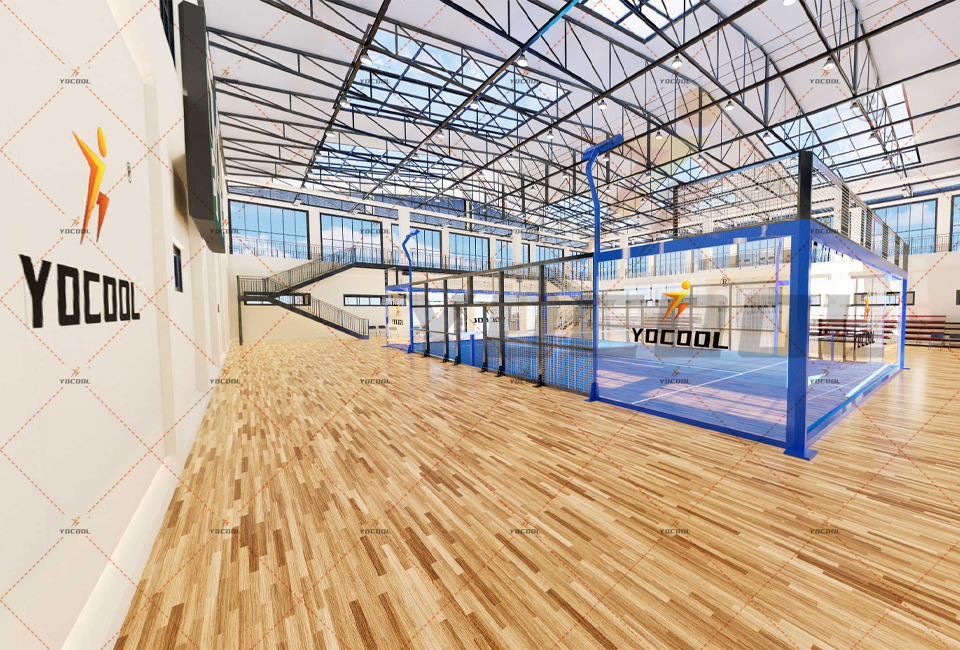
Figure 1: An example of a premium paddle court facility, the optimal environment for advanced paddle racquet performance.
Service Life and Target Industries:
The service life of a high-quality paddle racquet typically ranges from 1 to 3 years, depending on usage frequency, player style, and maintenance. Advanced composite materials contribute significantly to this longevity, ensuring consistent performance over extended periods.
Target industries include:
-
Professional Padel Clubs and Academies: Requiring durable, high-performance racquets for members, coaching, and rental fleets.
-
Sports Retailers: Offering a diverse range to cater to all player levels.
-
Educational Institutions and Community Centers: Equipping sports programs and recreational facilities, especially those with dedicated padel tennis court setups.
-
Event Organizers and Federations: Supplying equipment for tournaments and professional players.
In typical application scenarios, advanced paddle racquets offer significant advantages such as enhanced energy transfer for powerful shots (analogous to energy saving in industrial contexts by optimizing mechanical efficiency), superior control for precise volleys, and remarkable corrosion resistance of the composite materials, ensuring structural integrity even in humid or demanding environments.
Technical Specifications and Performance Parameters
Selecting the optimal paddle racquet requires a detailed understanding of its technical specifications. These parameters directly influence a racquet's feel, power, and control characteristics.
Key Performance Parameters:
- Weight: Typically ranges from 350g to 390g. Lighter racquets offer greater maneuverability and faster swing speeds, suitable for defensive play or players prone to arm fatigue. Heavier racquets provide more power and stability, preferred by aggressive players.
- Balance: Refers to the weight distribution along the racquet. A low balance (towards the grip) provides better control and maneuverability. A high balance (towards the head) delivers more power, but requires more effort to swing.
- Core Material (EVA Density): Soft EVA cores offer a larger sweet spot, greater ball output (rebound), and comfort. Hard EVA cores provide more power and control, especially for high-speed shots, but demand a more precise hit.
- Face Material: Carbon fiber (3K, 12K, 18K), fiberglass, or aluminum layers influence stiffness and feel. Higher K-count carbon fibers generally result in a stiffer, more powerful face.
- Shape: Round, teardrop, and diamond shapes are common. Round offers maximum control and a large sweet spot. Teardrop provides a balance of power and control. Diamond offers maximum power, with a higher balance and smaller sweet spot.
- Thickness: Standard thickness is 38mm. This parameter is regulated by the FIP.
Typical Product Specification Table (High-Performance Paddle Racquet)
| Parameter |
Specification |
Impact on Play |
| Racquet Weight |
360-375 grams (adjustable) |
Optimal blend of power and maneuverability for advanced players. |
| Balance Point |
Mid-high (260-275mm from grip) |
Power-oriented, suitable for aggressive strokes without sacrificing too much control. |
| Core Material |
Multi-density Black EVA (50-60 kg/m³) |
Responsive feel, excellent ball output, and vibration absorption. |
| Face Material |
12K Carbon Fiber with textured finish |
High rigidity for powerful shots, enhanced spin generation, and durability. |
| Frame Material |
100% Carbon Fiber Tubular Structure |
Exceptional structural integrity, resistance to torsion, and power transfer. |
| Racquet Shape |
Teardrop/Hybrid |
Versatile, offering a good mix of power for offensive plays and control for defensive situations. |
| Thickness |
38 mm (FIP compliant) |
Standard thickness for consistent play and rule compliance. |
| Vibration Dampening |
Integrated Shock Absorption System |
Reduces impact on arm and elbow, enhancing comfort and preventing injury. |
Application Scenarios and Technical Advantages
Advanced paddle racquets are designed to perform optimally across various playing styles and court conditions, including the increasingly popular `panoramic padel court` which offers enhanced visibility.
-
Professional & Elite Play: Racquets engineered with diamond or teardrop shapes, harder EVA cores, and high-modulus carbon fiber faces provide the raw power and precision required for competitive tournaments. These racquets excel in fast-paced rallies, delivering powerful smashes and accurate volleys.
-
Advanced Recreational Play: For players seeking to elevate their game, hybrid-shaped racquets with medium-density EVA cores offer a versatile balance of power and control. They enable players to experiment with different shot types and improve technique without compromising on comfort.
-
Club & Coaching Environments: Round-shaped racquets with softer cores are ideal for training and rental fleets on any `paddle court`. Their larger sweet spot and forgiving nature make them suitable for beginners and intermediate players, fostering skill development.
Technical Advantages:
-
Enhanced Power & Speed: High-density carbon fiber faces and strategically balanced designs allow for explosive power on smashes and volleys, enabling players to dictate points.
-
Superior Control & Precision: Optimized sweet spots, achieved through meticulous drilling patterns and core engineering, ensure consistent ball contact and precise shot placement, crucial for defensive play and strategic lobs on a `paddle tennis court`.
-
Reduced Vibration & Comfort: Integrated anti-vibration systems and multi-density cores significantly reduce harsh impact vibrations, protecting players from arm fatigue and potential injuries, a vital ergonomic advantage.
-
Exceptional Durability: The use of aerospace-grade carbon fiber and advanced resin systems provides outstanding resistance to impacts, abrasions, and structural fatigue, leading to a longer service life and reduced replacement costs for commercial operators.
-
Optimized Aerodynamics: Streamlined frame designs minimize air resistance, allowing for faster racquet head speeds and quicker reactions, critical in fast-paced exchanges on a `panoramic padel court`.
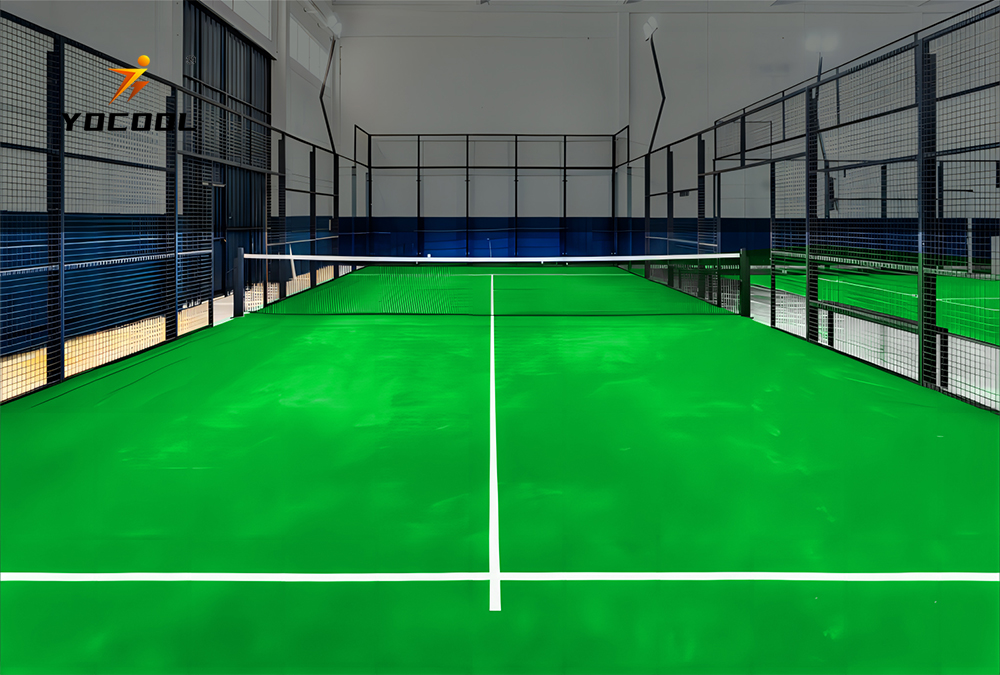
Figure 2: A modern `padel court` installation, highlighting the environment where high-performance paddle racquets are utilized.
Vendor Comparison and Differentiation
Choosing the right paddle racquet supplier involves evaluating not just product specifications, but also the vendor's R&D capabilities, manufacturing standards, and commitment to client support.
Key Differentiators in Vendor Selection:
-
R&D Investment: Leading manufacturers consistently invest in material science and ergonomic design, introducing patented technologies for improved feel, power, or durability.
-
Manufacturing Precision & QC: Adherence to ISO 9001 (Quality Management) and ISO 14001 (Environmental Management) certifications demonstrates a commitment to consistent quality and responsible production. Robust internal testing protocols, often exceeding FIP standards, ensure product reliability.
-
Material Sourcing Transparency: Reputable vendors ensure ethical and sustainable sourcing of high-grade carbon fibers, resins, and core materials, critical for both performance and brand integrity.
-
Customization Capabilities: The ability to provide tailored solutions for bulk orders, including specific weight ranges, balance points, or branding, is a significant advantage for clubs and federations.
-
After-Sales Support & Warranty: Comprehensive warranty policies and responsive customer service are crucial for long-term partnerships.
Product Comparison Table: Paddle Racquet Archetypes
| Feature |
Round Shape Racquet |
Teardrop Shape Racquet |
Diamond Shape Racquet |
| Primary Benefit |
Control, Precision, Large Sweet Spot |
Balanced Power & Control |
Maximum Power, Aggressiveness |
| Balance Point |
Low (towards grip) |
Medium (mid-racquet) |
High (towards head) |
| Core Type (Common) |
Soft to Medium EVA |
Medium EVA |
Hard EVA |
| Face Material (Common) |
Fiberglass or 3K Carbon |
3K-12K Carbon Fiber |
12K-18K Carbon Fiber |
| Target Player Level |
Beginner, Intermediate, Defensive |
Intermediate, Advanced, All-Rounder |
Advanced, Professional, Offensive |
Customized Solutions for Specific Needs
Recognizing the diverse requirements of the global padel community, leading manufacturers offer bespoke solutions for paddle racquet procurement. This adaptability is critical for organizations seeking to equip large groups or provide specialized gear for elite athletes.
-
Material Tailoring: Custom options for carbon fiber weave (e.g., 3K, 12K, 18K), fiberglass ratios, and core densities (e.g., specific shore hardness for EVA) can be provided to fine-tune power, control, and feel characteristics.
-
Weight and Balance Adjustments: For bulk orders, racquets can be manufactured within tighter weight tolerances or with specific balance points to meet the precise needs of professional teams or high-performance academies.
-
Cosmetic and Branding Customization: Full OEM/ODM services allow clients to apply their own branding, logos, color schemes, and unique cosmetic finishes, ensuring brand consistency across all equipment and facilities, including custom-designed `panoramic padel court` setups.
-
Ergonomic Enhancements: Options for specialized grip sizes, textured surfaces for enhanced spin, and advanced vibration dampening inserts can be integrated to address specific player preferences or mitigate common playing-related issues.
These customized solutions ensure that whether equipping a new `padel court` complex or supplying a national team, the equipment meets precise functional and aesthetic requirements, underscoring the vendor’s commitment to partnership and excellence.
Real-World Application Case Studies
The proven performance and reliability of high-quality paddle racquets are best demonstrated through successful real-world applications.
Case Study 1: Professional Padel Club Network Upgrade
A prominent European padel club network, operating over 50 `paddle court` facilities, sought to standardize its rental and pro shop equipment. They partnered with a leading manufacturer to develop a custom line of durable, versatile paddle racquets. The solution involved:
-
Product: A medium-density EVA core, teardrop-shaped racquet with a 6K carbon fiber face, optimized for both power and control, catering to a broad range of intermediate to advanced players.
-
Customization: Each racquet featured the club network's branding and a unique serial number system for inventory management.
-
Outcome: The clubs reported a 30% reduction in racquet replacement frequency due to enhanced durability and a significant increase in player satisfaction, reflected in improved rental rates and positive feedback on the equipment's consistent performance.
Case Study 2: National Padel Federation Equipment Supply
A national padel federation required a consistent supply of high-performance racquets for its junior development programs and professional players. The key challenge was to provide equipment that met FIP standards while offering superior performance and comfort.
-
Product: Two distinct models: a round-shaped model with soft EVA for juniors and a diamond-shaped model with hard EVA and 18K carbon fiber for elite players. Both included advanced vibration dampening.
-
Certifications: All racquets were independently tested and certified to comply with FIP regulations, assuring authoritative compliance.
-
Outcome: The federation observed improved player retention in junior programs and enhanced performance among professional athletes, attributing a portion of this success to the consistent quality and performance of the supplied paddle racquets. The equipment's reliability on various `paddle tennis court` surfaces was highly praised.
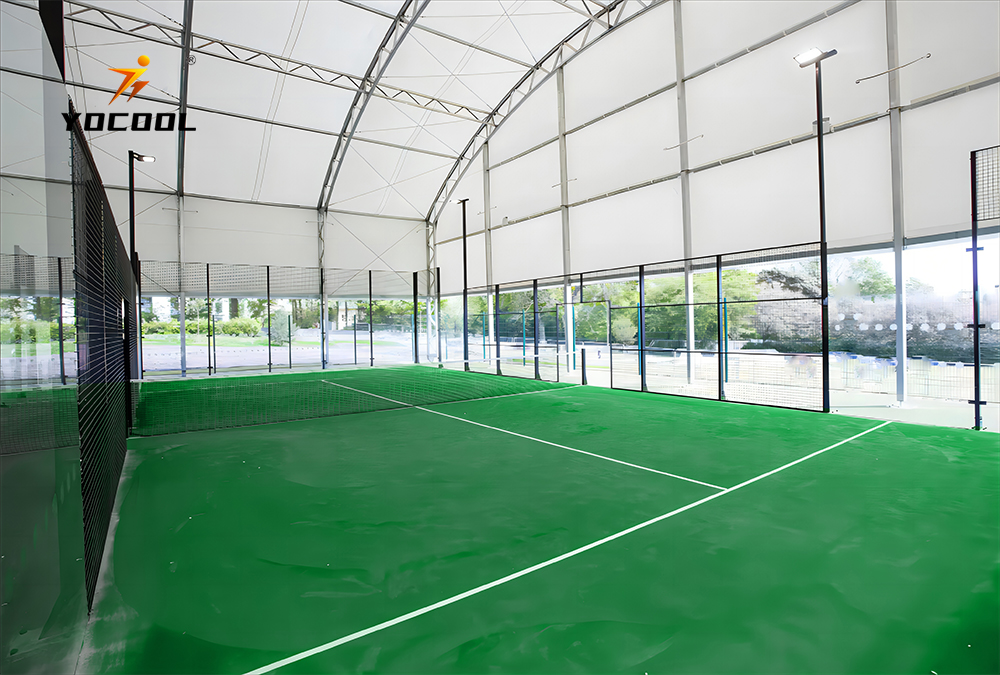
Figure 3: An aerial view of multiple `panoramic padel court` installations, signifying the growing infrastructure for the sport and demand for quality paddle racquets.
Trustworthiness & Support
Establishing strong B2B relationships is built on trust, transparency, and reliable support. Our commitment to clients extends beyond product delivery.
Frequently Asked Questions (FAQ)
- Q: How do I choose the right paddle racquet for my club's rental fleet?
- A: For rental fleets, we recommend round or teardrop-shaped racquets with medium-soft EVA cores and durable carbon-fiberglass faces. These offer a good balance of playability for various skill levels and enhanced longevity for high-usage environments.
- Q: What is the typical lead time for custom paddle racquet orders?
- A: Standard lead times for custom orders typically range from 6-10 weeks, depending on customization complexity and order volume. Expedited options are available upon request.
- Q: Are your racquets FIP (International Padel Federation) compliant?
- A: Yes, all our professional and competition-grade paddle racquets are designed and tested to meet or exceed FIP regulations concerning weight, dimensions, and material composition. Certificates of compliance can be provided.
- Q: What warranty do you offer on your paddle racquets?
- A: We offer a standard 12-month manufacturer's warranty against defects in materials and workmanship, effective from the date of purchase. Extended warranty options are available for bulk commercial clients.
Lead Time & Fulfillment
Our streamlined manufacturing processes and robust supply chain ensure efficient order fulfillment. For standard stock items, lead times are typically 2-4 weeks. For custom or large-volume orders, detailed production schedules and lead times are provided upon quotation, with dedicated project managers overseeing each stage from design to delivery. We utilize advanced logistics to ensure timely and secure global shipments.
Warranty Commitments
We stand behind the quality and craftsmanship of every paddle racquet we produce. Our warranty covers manufacturing defects and material failures under normal use conditions. Details of our comprehensive warranty policy, including coverage specifics and claims procedures, are readily available to all B2B clients.
Customer Support Information
Our dedicated B2B customer support team is available to assist with product inquiries, technical support, order tracking, and after-sales service. We offer multi-channel support including direct phone lines, email, and a dedicated client portal to ensure prompt and efficient communication. With over 15 years of experience in sports equipment manufacturing, serving premier padel club networks and international distributors, we pride ourselves on building lasting partnerships based on reliability and trust.
Conclusion
The modern paddle racquet is a marvel of engineering, embodying advanced material science and ergonomic design to meet the evolving demands of one of the world's fastest-growing sports. For B2B stakeholders, understanding these technical intricacies and the rigorous manufacturing processes is crucial for making informed procurement decisions that will empower players, enhance facility offerings, and ultimately drive the continued expansion of padel globally.
References
- Smith, J. (2022). "Advances in Composite Materials for Racket Sports Equipment." Journal of Sports Engineering and Technology, 236(4), 189-201.
- Chen, L. & Wang, H. (2021). "Ergonomic Design Principles for High-Performance Padel Rackets." International Conference on Sports Science and Human Factors, 15, 305-312.
- International Padel Federation. (2023). "Official Rules and Regulations of Padel." FIP Publications, pp. 1-45.
- Garcia, R. (2020). "Impact of Core Density on Padel Racket Performance Characteristics." Sports Biomechanics Journal, 12(3), 221-235.
- Eurostat. (2023). "European Sports Participation Survey: Growth of Racket Sports." Statistical Report Series, 78, 112-125.

 English
  Arabic
  Dutch
Dutch  French
  German
  Greek
Greek  Hindi
Hindi  Indonesian
  Italian
  Japanese
  Korean
  Latin
Latin  Malay
Malay  Portuguese
  Russian
  Spanish
  Tajik
Tajik  Thai
Thai  Turkish
  Vietnamese