Launching a professional padel project requires more than just a flat piece of land; it demands a strategic blend of architectural precision, high-grade materials, and a deep understanding of player dynamics. As one of the fastest-growing sports worldwide, padel combines the agility of tennis with the social atmosphere of squash, creating a unique investment opportunity for sports club owners and urban developers alike.
The global surge in demand for padel facilities has shifted the industry toward more sustainable and durable construction methods. A successful padel project must prioritize safety, acoustic management, and structural integrity to ensure long-term viability and a premium user experience. From the tempered glass walls to the specialized synthetic turf, every component plays a critical role in the game's performance.
Understanding the intricacies of a padel project allows stakeholders to maximize their return on investment while promoting community health. By integrating modern manufacturing standards and ergonomic designs, developers can create venues that attract both professional athletes and casual hobbyists, ensuring the facility remains a vibrant hub for years to come.
Global Relevance and Industry Context of Padel Projects
The global appetite for padel is expanding at an unprecedented rate, particularly across Europe, the Middle East, and the Americas. Data from international sports federations indicates a compound annual growth rate that outperforms traditional racket sports, driving a massive wave of padel project developments in urban centers. This growth is fueled by the sport's accessibility and its ability to blend fitness with social interaction.
However, this rapid expansion brings significant challenges in standardization. Many early installations suffered from poor drainage or inadequate glass tempering, leading to safety concerns and high maintenance costs. The industry is now pivoting toward ISO-compliant manufacturing and professional engineering to ensure that every new padel project meets the rigorous demands of high-frequency play and varied climatic conditions.
Defining the Modern Padel Project Infrastructure
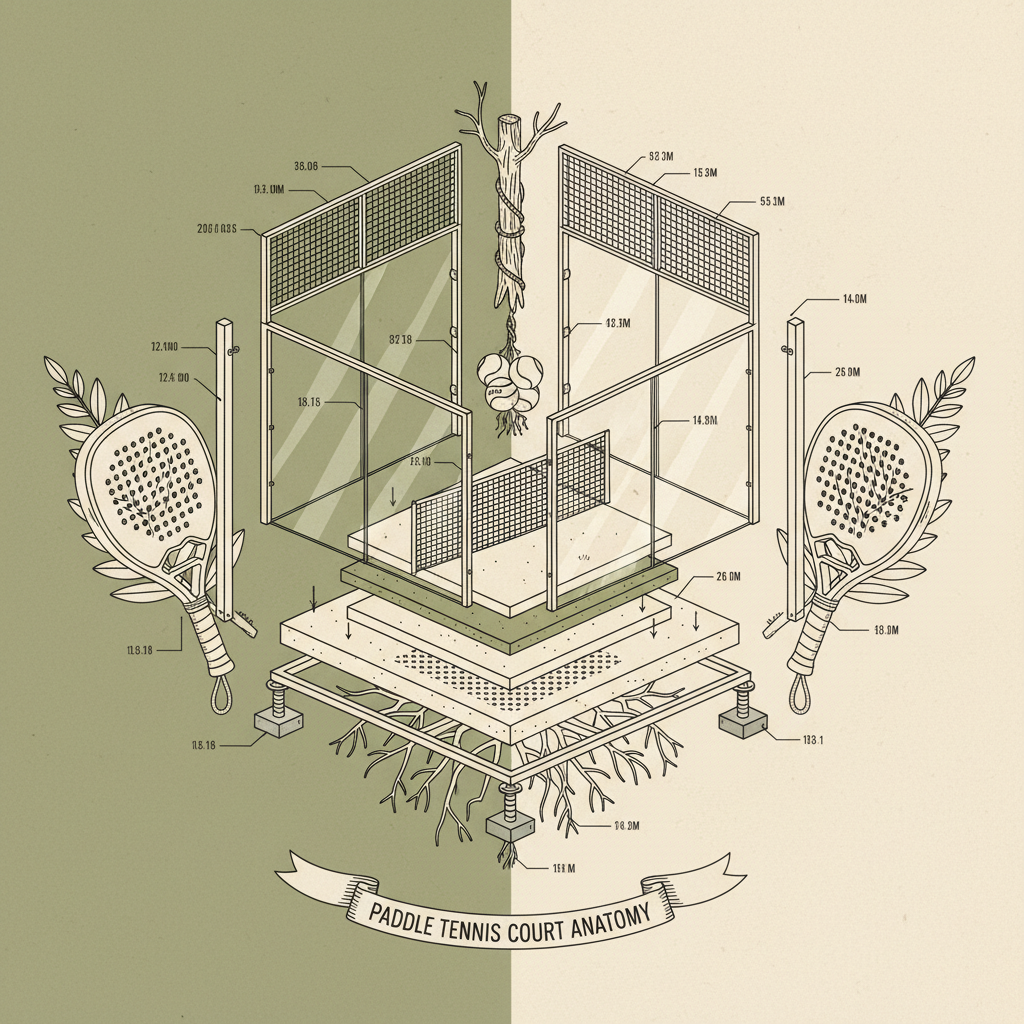
In its simplest form, a padel project refers to the complete end-to-end lifecycle of designing, manufacturing, and installing a padel court facility. Unlike a standard tennis court, this infrastructure is a complex assembly of high-strength steel frames, tempered safety glass, and specialized synthetic turf, all designed to facilitate a game where the walls are an active part of the play.
Beyond the physical court, a modern project encompasses the surrounding ecosystem, including lighting systems, spectator seating, and drainage solutions. The goal is to create a seamless environment where the technical parameters—such as ball bounce consistency and surface friction—align perfectly with the needs of the players, whether they are amateurs or professionals.
From a humanitarian and social perspective, these projects serve as vital "third places" in urban environments. By providing accessible spaces for physical activity, a well-executed padel project addresses the growing need for community-based health initiatives, combating sedentary lifestyles and fostering social cohesion through sport.
Core Components for High-Performance Court Construction
Durability is the cornerstone of any successful padel project. The structural framework must be treated with anti-corrosion coatings to withstand humidity and outdoor exposure. The use of galvanized steel ensures that the court maintains its rigidity over decades of use, preventing the frame from warping under the pressure of high-impact play.
The selection of tempered glass is equally critical. A professional padel project typically utilizes 10mm or 12mm toughened glass to maximize safety and visibility. This component is not merely a barrier but a performance tool; the glass must be installed with precision to ensure a perfectly linear bounce, which is essential for the technical integrity of the game.
Lastly, the surface material—usually a high-density polyethylene (HDPE) monofilament turf—determines the player's grip and joint impact. Integrating a high-quality turf system into the padel project reduces the risk of injuries and ensures that the court remains playable in various weather conditions, provided the underlying drainage system is correctly engineered.
Scalability and Cost Efficiency in Padel Project Planning
Scalability allows developers to start with a small number of courts and expand as the community grows. A modular approach to a padel project reduces initial capital expenditure while ensuring that future additions fit perfectly into the existing layout. This flexibility is crucial for sports clubs that want to test market demand before committing to a full-scale complex.
Cost efficiency is achieved through optimized logistics and the use of prefabricated components. By sourcing high-quality materials from specialized manufacturers, the installation time for a padel project can be reduced from months to weeks, significantly lowering labor costs and allowing the facility to generate revenue much sooner.
Comparative Efficiency of Padel Project Implementation Methods
Global Applications and Urban Integration Use Cases
Across the globe, the padel project model is being adapted to suit diverse environments. In densely populated cities like Madrid or Dubai, rooftop installations have become common, transforming unused concrete slabs into high-revenue sporting zones. These projects require specialized wind-load calculations and lightweight structural supports to ensure safety at height.
In other contexts, such as remote industrial zones or corporate campuses, padel courts are used as employee wellness tools. By integrating a padel project into a corporate environment, companies foster better mental health and team bonding, proving that the application of this sport extends far beyond traditional commercial sports clubs.
Long-Term Value and Sustainability Advantages
The long-term value of a padel project lies in its low operational overhead relative to its high earning potential. Once installed, the maintenance requirements for high-grade turf and tempered glass are minimal, allowing owners to focus on community growth and event hosting. This financial reliability makes it an attractive asset for real estate portfolios.
From a sustainability angle, the industry is moving toward "Green Courts." Modern padel project designs now incorporate recycled plastics for turf fibers and energy-efficient LED lighting systems. These innovations reduce the carbon footprint of the facility while lowering electricity costs for the operator.
Furthermore, the social impact of these facilities provides an intangible but powerful value. By offering a safe, inclusive environment for all ages and skill levels, a padel project builds trust and loyalty within the local community, ensuring a steady stream of users and a positive brand image for the investors.
Future Trends and Technological Innovations in Padel
The next generation of the padel project will be defined by digital transformation. We are seeing the integration of "Smart Courts" equipped with AI-powered cameras and sensors that track player movement, provide real-time performance analytics, and automatically record match highlights. This gamification of the sport is expected to attract a younger, tech-savvy demographic.
Material science is also evolving, with the introduction of acoustic-dampening glass and self-healing turf surfaces. These advancements aim to solve the common problem of noise pollution in urban padel project installations, making it easier to get permits for residential areas and improving the overall acoustic experience for players.
Automation is another key trend, with autonomous booking systems and smart lighting that adjusts based on occupancy and natural light levels. These integrated systems turn a simple padel project into a highly efficient, self-managing business asset.
Technical Analysis of Padel Project Component Evolution
|
Component
|
Traditional Standard
|
Modern Innovation
|
Impact Score (1-10)
|
| Glass Walls |
Standard Tempered |
Acoustic Dampened |
9 |
| Court Surface |
Basic Synthetic |
Recycled Monofilament |
8 |
| Steel Frame |
Painted Steel |
Hot-Dip Galvanized |
10 |
| Lighting |
Metal Halide |
Smart Adaptive LED |
9 |
| Installation |
Manual Assembly |
Prefab Modular |
8 |
| Court Mgmt |
Paper/Manual |
AI Cloud Booking |
7 |
FAQS
Depending on the scale, a standard padel project usually takes 4 to 8 weeks. This includes site preparation, foundation pouring, and the final assembly of the court and turf. Prefabricated systems can significantly shorten the assembly phase to just a few days once the base is ready.
Proper drainage is achieved by creating a porous sub-base (usually crushed stone) and a slight slope (approximately 0.5% to 1%) toward the edges. Using a perforated drainage pipe system around the perimeter of the padel project prevents water pooling and preserves the integrity of the synthetic turf.
Yes, professional projects use 10mm or 12mm tempered safety glass. This material is specifically designed to withstand heavy impacts. In the rare event of breakage, it shatters into small, blunt granules rather than sharp shards, ensuring player safety.
Absolutely. Padel courts can be installed on almost any flat surface. For rooftops, the focus shifts to structural load-bearing capacity and wind resistance. Special anchoring systems are used to secure the frame without compromising the building's waterproofing membrane.
Maintenance primarily involves brushing the synthetic turf to redistribute the silica sand, cleaning the glass walls for visibility, and checking the tension of the steel mesh. Regular maintenance ensures the ball bounce remains consistent and the facility looks professional.
Maximize ROI by offering a mix of membership tiers, hosting local tournaments, and integrating a pro-shop or cafe. Additionally, choosing high-durability materials reduces long-term maintenance costs, allowing you to keep the courts operational more hours per day.
Conclusion
Executing a high-quality padel project is a sophisticated exercise in balancing technical engineering with commercial strategy. By focusing on durable materials like galvanized steel and tempered glass, and embracing sustainable practices, developers can create sports facilities that are not only profitable but also resilient to the test of time. The integration of smart technology and modular design ensures that these projects can evolve alongside the sport's rapid growth.
As we look toward the future, the success of any padel venture will depend on the ability to provide a premium, safe, and inclusive experience. Whether you are upgrading an existing club or building a new urban complex, prioritizing quality over short-term cost savings is the only way to guarantee long-term viability. For professional guidance and industry-leading equipment to bring your vision to life, visit our website: www.yocoolcn.com



 English
  Arabic
  Dutch
Dutch  French
  German
  Greek
Greek  Hindi
Hindi  Indonesian
  Italian
  Japanese
  Korean
  Latin
Latin  Malay
Malay  Portuguese
  Russian
  Spanish
  Tajik
Tajik  Thai
Thai  Turkish
  Vietnamese