
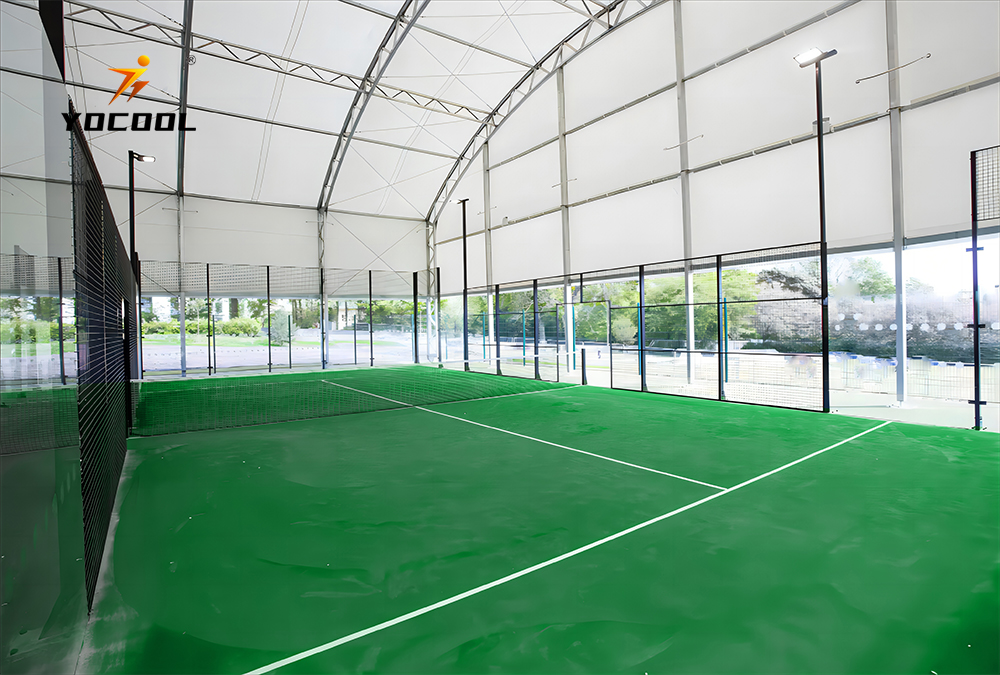
If you play padel a few times a week, you quickly learn this: the court matters almost as much as the gear. I’ve tested plenty of paddle racquet setups, and—surprisingly—the biggest leap in playability came when the club upgraded to a roofed court with tempered glass that actually rebounds consistently. That’s where the NO.6 Padel court with conjoined roof enters the chat, built in Shijiazhuang, Hebei, China, and clearly aimed at clubs that want fewer rain cancellations and better acoustics for coaching.
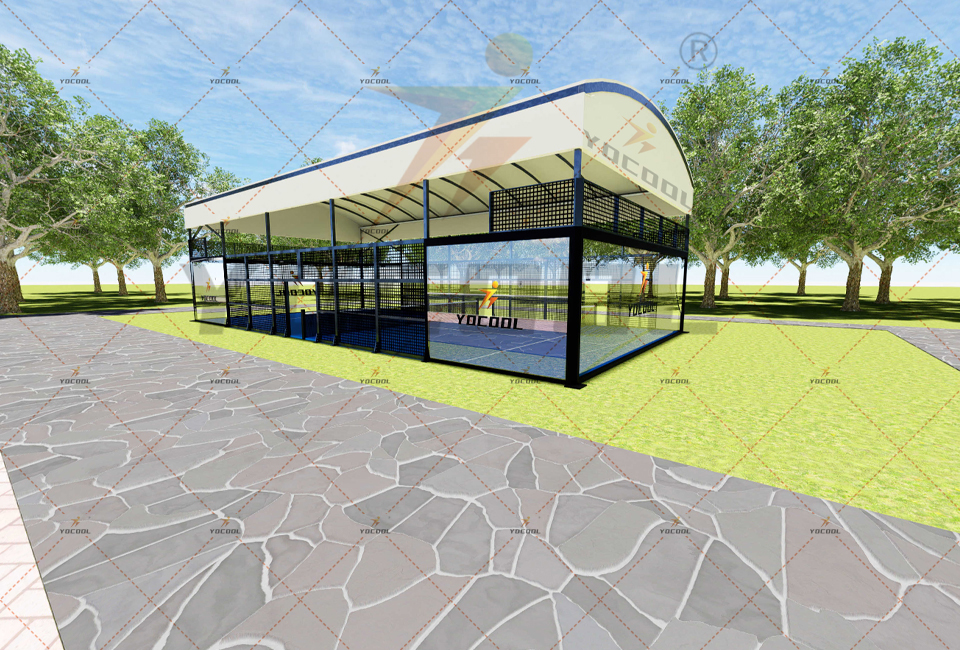
| Court size | 20 m × 10 m (FIP regulation) |
| Glass panels | Tempered glass ≈12 mm (EN 12150), polished edges |
| Steel frame | Q235/Q355, hot-dip galvanized + powder coat (ISO 12944) |
| Roof (conjoined) | Galvanized truss + UV PC sheets; typical clearance ≈8 m (real-world sites vary) |
| Mesh panels | 50×50 mm, Ø4 mm wire, anti-vibration fixings |
| Turf | Fibrillated 12–15 mm, silica infill; EN 15330-1 compliant |
| Lighting | LED, target 500–750 lux (EN 12193 guidance) |
| Service life | Steel 15–20 yrs; glass 8–10 yrs; turf 4–6 yrs (usage/weather dependent) |
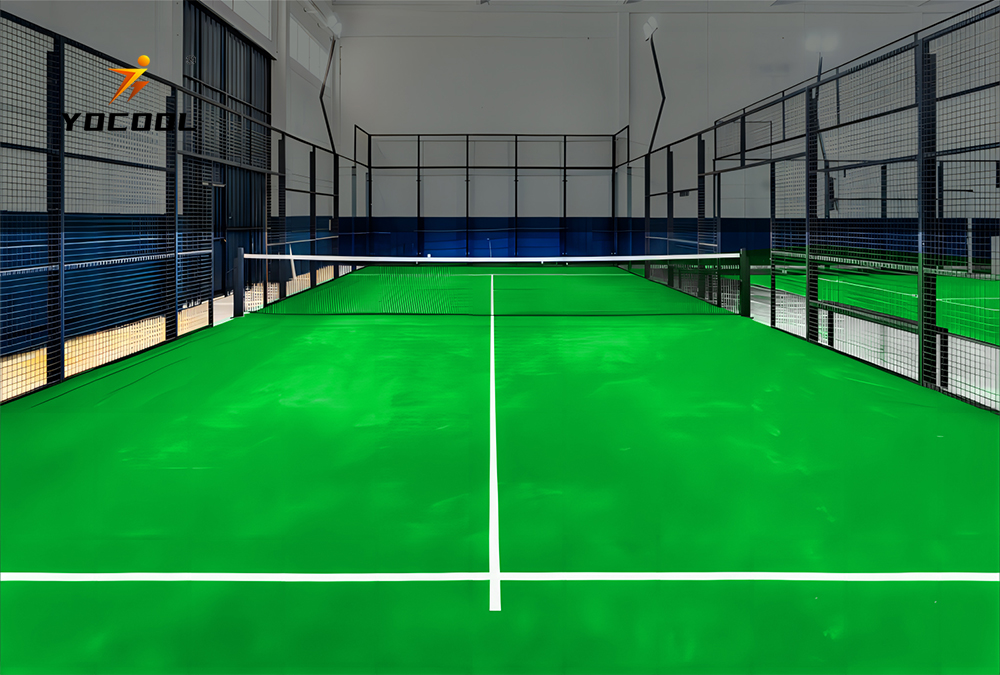
Use cases? Clubs, schools, hotels, municipalities—anywhere cancelled sessions hurt revenue. Many customers say the roofed format protects softer-core paddle racquet play, making the sweet spot feel… sweeter.
| Vendor | Roofed Option | Certs/Docs | Lead Time | Warranty | Price Band |
|---|---|---|---|---|---|
| Yocool (Hebei) | Conjoined roof, modular | EN 12150, EN 15330-1, EN 1991 calcs; ISO 9001 | ≈6–10 weeks | 5 years structure | Mid–Upper |
| Vendor A (EU) | Single-span roof | EN 1090 FPC; CE structural | ≈8–12 weeks | 10 years frame | Upper |
| Vendor B (APAC) | Optional canopy | Basic docs, limited test data | ≈4–8 weeks | 2–3 years | Entry–Mid |
Options include color-matched frames, anti-glare glass, 8/10/12 mm glass, acoustic panels, and smart lighting. One coastal club reported 32% more booked hours after installing the conjoined roof, with players noting “quieter glass” and truer rebound with softer paddle racquet faces. Another school program said maintenance dropped because the roof kept infill drier after storms.
Origin: Shijiazhuang, Hebei, China. Certifications and detailed test reports available on request; local code compliance may vary by region.
Top Professional Padel Court for Sale Factories Buyer Guide
Guide to Choosing the Best padel court for sale manufacturers
Find Reliable Padel Court for Sale Suppliers for Quality Courts
Yocool Platform Paddle Tennis Factory Quality Equipment Solutions
Find a Reliable Platform Paddle Tennis Supplier for Quality Equipment
Discover Top Platform Paddle Tennis Factories for Superior Equipment
 English
  Arabic
  Dutch
Dutch  French
  German
  Greek
Greek  Hindi
Hindi  Indonesian
  Italian
  Japanese
  Korean
  Latin
Latin  Malay
Malay  Portuguese
  Russian
  Spanish
  Tajik
Tajik  Thai
Thai  Turkish
  Vietnamese