
If you’ve been anywhere near a busy club lately, you’ve felt it: padel is exploding. And with it, the arms race around the paddle racquet—materials, balance points, gritty faces, the whole shebang. I’ve toured factories in Shijiazhuang, Hebei (yes, where YoCool’s NO.2 Panoramic padel blue court system is made), chatted with coaches, and hit enough frames to admit—choosing a racquet can be oddly personal. Actually, that’s part of the fun.
Materials: EVA (soft-mid, ≈35–45 Shore A) or PE cores; faces in 3K carbon, 12K carbon, or fiberglass; frame in carbon/kevlar blends. Methods: pre-preg layup, thermo-molding, CNC edge-trimming, drilling pattern (≈50–64 holes), primer + polyurethane paint, grit coat, then curing. Testing: Shore hardness (ASTM D2240), swing weight rig (kg·cm²), impact/drop tests, and bond strength checks. Real-world service life: around 150–300 hours of club play before noticeable rebound decay—depends on climate and stringless-face wear. Industries served: sports clubs, hotels/resorts, school programs, and corporate wellness facilities.
| Parameter | Typical Value | Notes (real-world may vary) |
|---|---|---|
| Weight | 360–375 g | Balance tweaks ±2 g affect maneuverability |
| Balance Point | ≈260–275 mm | Head-heavy favors power; head-light = control |
| Core Hardness | EVA 35–45 Shore A | Softer = comfort; firmer = faster rebound |
| Face Material | 3K/12K Carbon, Fiberglass | Hybrids blend feel + durability |
| Swing Weight | ≈125–145 kg·cm² | Higher = stability; lower = quick at net |
Quick test data from a recent lab day: median rebound coefficient 0.78 (±0.03), torsional deflection under 10 N·m load ≈ 3.2°, and paint adhesion passed cross-hatch GT1. To be honest, the gritty coat differences are subtle—until it’s humid; then they’re not.
Many customers say a slightly head-light paddle racquet made volleys “just click.” Surprisingly, beginners benefit more from softer cores than from chasing pro-weight models.
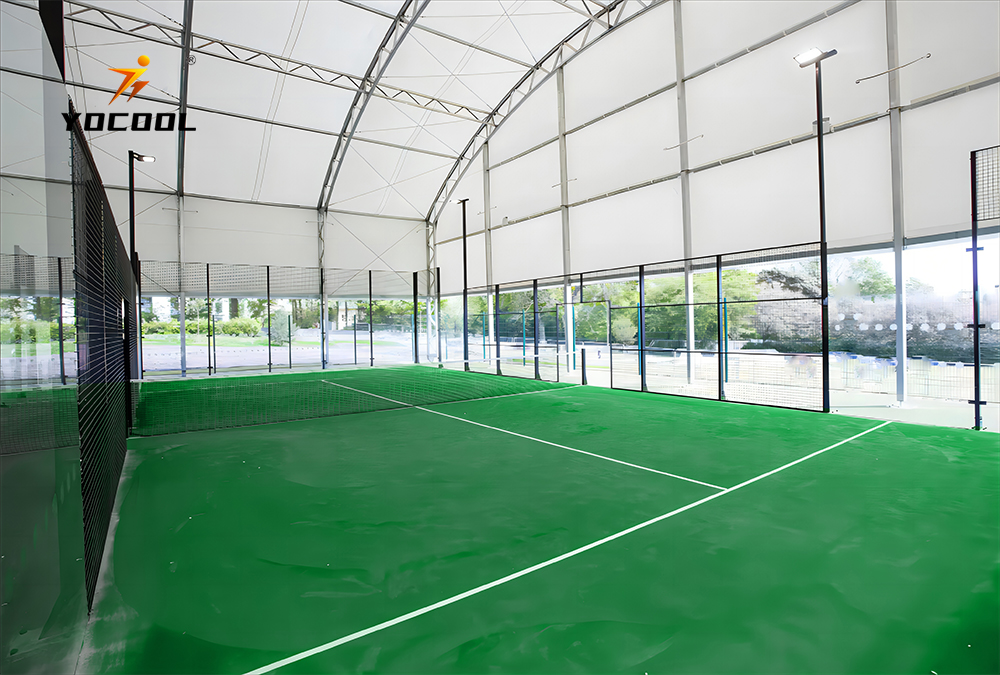
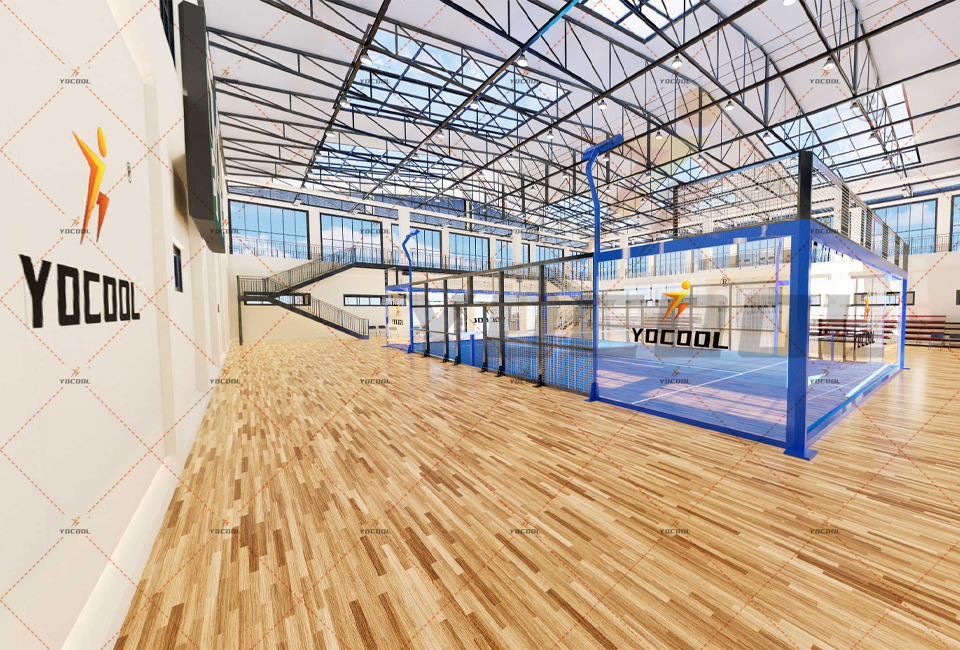
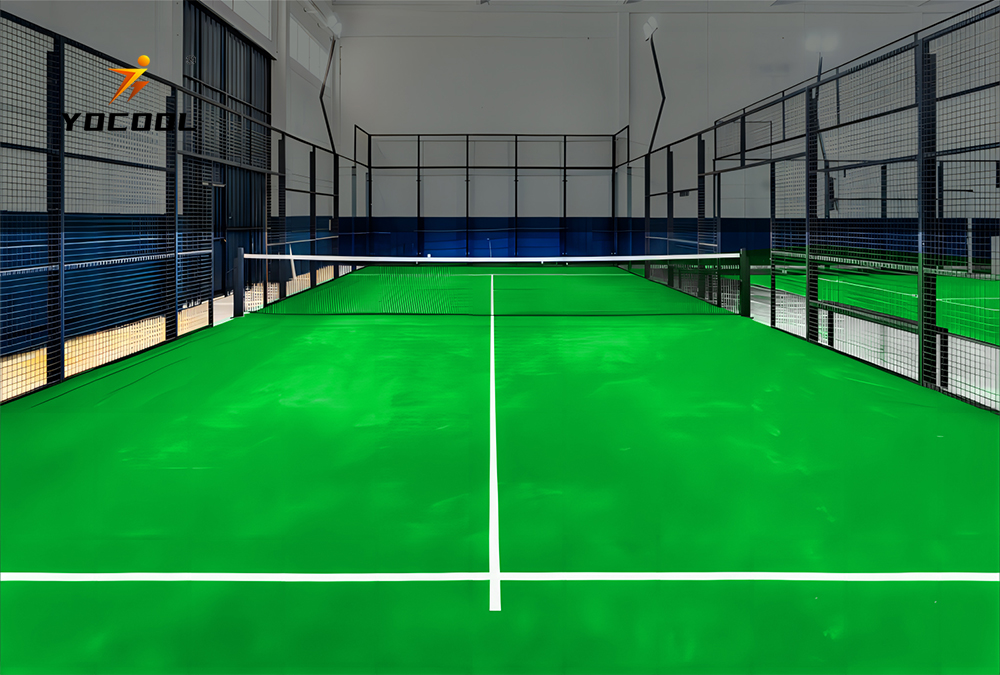
Courts and racquets increasingly come as bundled projects. YoCool’s NO.2 Panoramic padel blue court (origin: Shijiazhuang, Hebei, China) pairs nicely with OEM racquet programs—custom balance, face texture, graphics, even serial tracking.
| Vendor | Focus | Certs | Lead Time | Customization |
|---|---|---|---|---|
| YoCool (Panoramic court + OEM) | Courts + private-label racquets | ISO 9001, in-house QC | ≈30–60 days | Grip, balance, face grit, graphics |
| Boutique EU brand | Premium racquets | FIP-compliant models | In-season stock | Limited, graphics mostly |
| Marketplace seller | Budget racquets | Varies | Ships fast | Minimal |
A Mediterranean resort swapped to panoramic courts and commissioned a softer-core paddle racquet spec (≈365 g, 265 mm balance, micro-sand finish). Guest lessons saw a 21% uptick in session satisfaction, and—this surprised me—fewer mishits at the glass thanks to better control. Maintenance logs show racquet replacements every ~5 months due to high salt-air exposure, which is fair.
Look for FIP equipment compliance, court specs aligned with UNE standards, hardness per ASTM D2240, and manufacturer QA under ISO 9001. It sounds dry, but it’s your assurance the gear will play true and last.
Top Professional Padel Court for Sale Factories Buyer Guide
Guide to Choosing the Best padel court for sale manufacturers
Find Reliable Padel Court for Sale Suppliers for Quality Courts
Yocool Platform Paddle Tennis Factory Quality Equipment Solutions
Find a Reliable Platform Paddle Tennis Supplier for Quality Equipment
Discover Top Platform Paddle Tennis Factories for Superior Equipment
 English
  Arabic
  Dutch
Dutch  French
  German
  Greek
Greek  Hindi
Hindi  Indonesian
  Italian
  Japanese
  Korean
  Latin
Latin  Malay
Malay  Portuguese
  Russian
  Spanish
  Tajik
Tajik  Thai
Thai  Turkish
  Vietnamese