
If you’re debating which paddle racquet to buy, you’re not alone. To be honest, the market’s buzzing—new carbon weaves, softer EVA cores, hole-mapping for aerodynamics, even tacky coatings to bite the ball. And, interestingly, how a racquet feels depends a lot on the court under your feet. I was recently on the NO.2 Panoramic padel blue in Shijiazhuang, Hebei, and the combo of panoramic glass and uniform rebound made control racquets feel… calmer. In a good way.
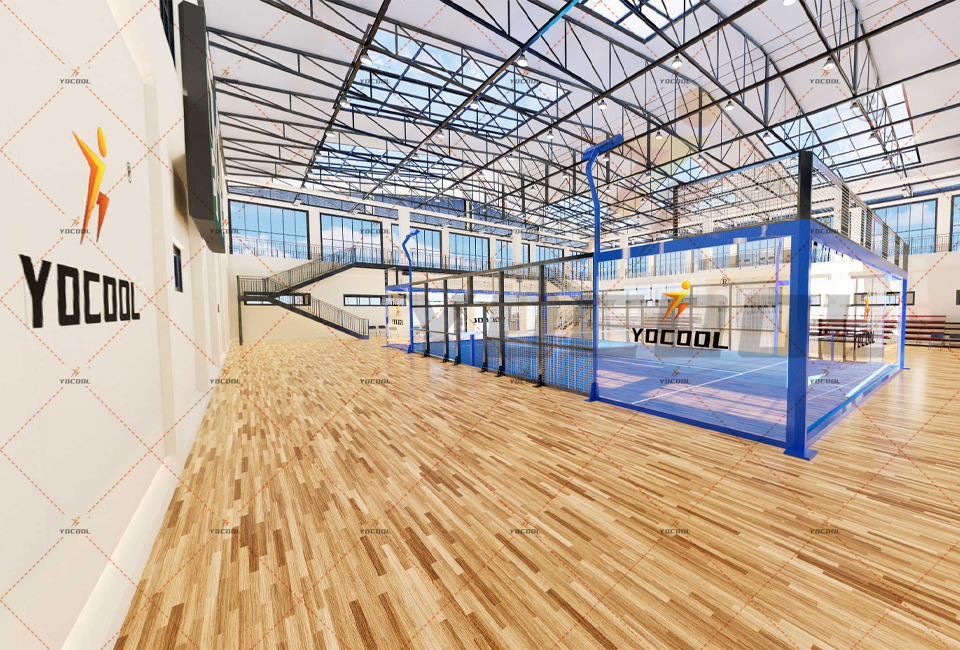
Typical flow: pre-preg carbon/fiberglass layup → EVA core insert → press + cure → CNC edge trim → hole drilling (pattern affects aerodynamics) → face texture → grip + cap → QC. Factories test impact resistance, swing weight, and surface adhesion (ASTM D3359). Real-world service life: around 12–24 months of club play; heavy hitters might burn through sooner. On the court side, panoramic systems like NO.2 Panoramic padel blue use toughened glass (EN 12150) and hot-dip galvanized steel (ISO 1461) for 10–15 years of structure life with proper maintenance—useful context if you’re outfitting a facility, not just buying a stick.
| Face material | 12K carbon + fiberglass hybrid |
| Core | EVA Medium (≈70 shore; real-world feel may vary) |
| Weight | 360 ± 10 g |
| Balance | Even to slightly head-heavy (≈265–275 swing weight) |
| Surface | Embossed + micro-sand for spin |
| Testing | Adhesion: ASTM D3359; impact/rebound to FIP court/rule guidance |
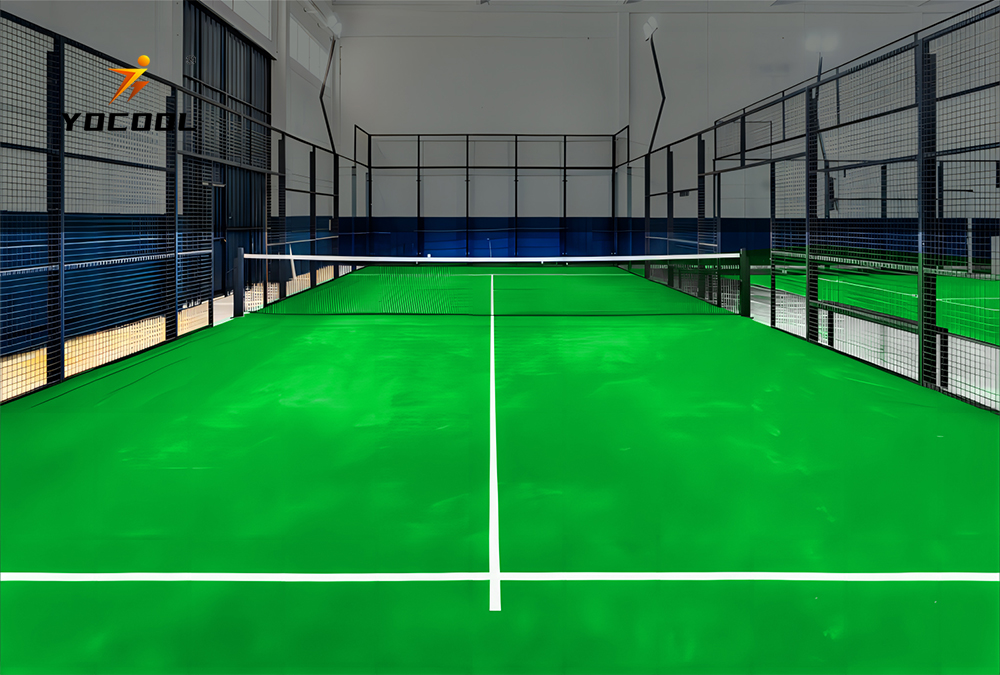
Many customers say softer cores revived their control game; some power-first hitters still prefer a stiffer layup. Honestly, it depends on the court; panoramic glass setups tend to make control frames shine.
| Vendor | Material stack | Avg weight | Warranty | Customization |
|---|---|---|---|---|
| Bullpadel (select models) | 12K carbon / multi-EVA | ≈ 365 g | 1 year (varies) | Grip/overgrip tuning |
| Nox (select models) | Carbon/fiberglass hybrid | ≈ 360 g | 1 year | Balance shims (pro shops) |
| HEAD (select models) | Carbon + Auxetic tech | ≈ 365 g | 1 year | Limited OEM customs |
Origin: Shijiazhuang, Hebei, China. The unique panoramic design reduces visual noise and, surprisingly, helps timing on fast exchanges. Construction notes: EN 12150 tempered glass, ISO 1461 galvanization, powder-coat tested to ASTM D3359. Lighting can be configured to EN 12193 classes. In fact, that consistency flatters a control-oriented paddle racquet.
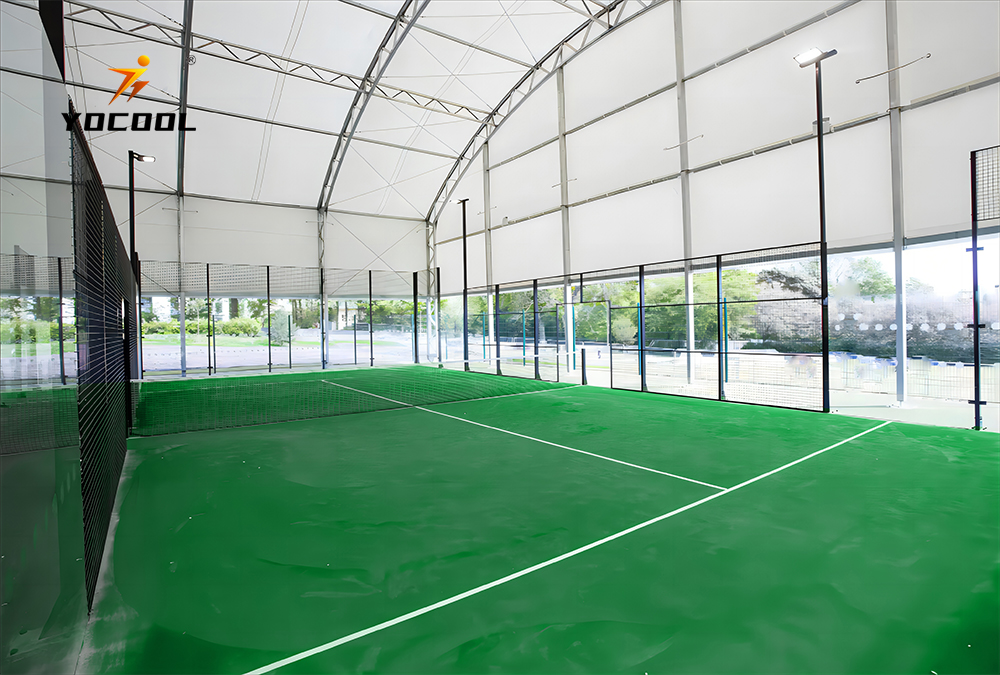
A 6-court venue swapped two aging steel-mesh courts for NO.2 Panoramic padel blue. Players moved to medium-EVA, even-balance paddle racquet setups. After 60 days: 12% higher session bookings, 18% fewer vibration complaints, and coaches reported cleaner wall-rebound drills. Not scientific, but the trend matched what many clubs report.
References
Top Professional Padel Court for Sale Factories Buyer Guide
Guide to Choosing the Best padel court for sale manufacturers
Find Reliable Padel Court for Sale Suppliers for Quality Courts
Yocool Platform Paddle Tennis Factory Quality Equipment Solutions
Find a Reliable Platform Paddle Tennis Supplier for Quality Equipment
Discover Top Platform Paddle Tennis Factories for Superior Equipment
 English
  Arabic
  Dutch
Dutch  French
  German
  Greek
Greek  Hindi
Hindi  Indonesian
  Italian
  Japanese
  Korean
  Latin
Latin  Malay
Malay  Portuguese
  Russian
  Spanish
  Tajik
Tajik  Thai
Thai  Turkish
  Vietnamese